Compelled to Behold

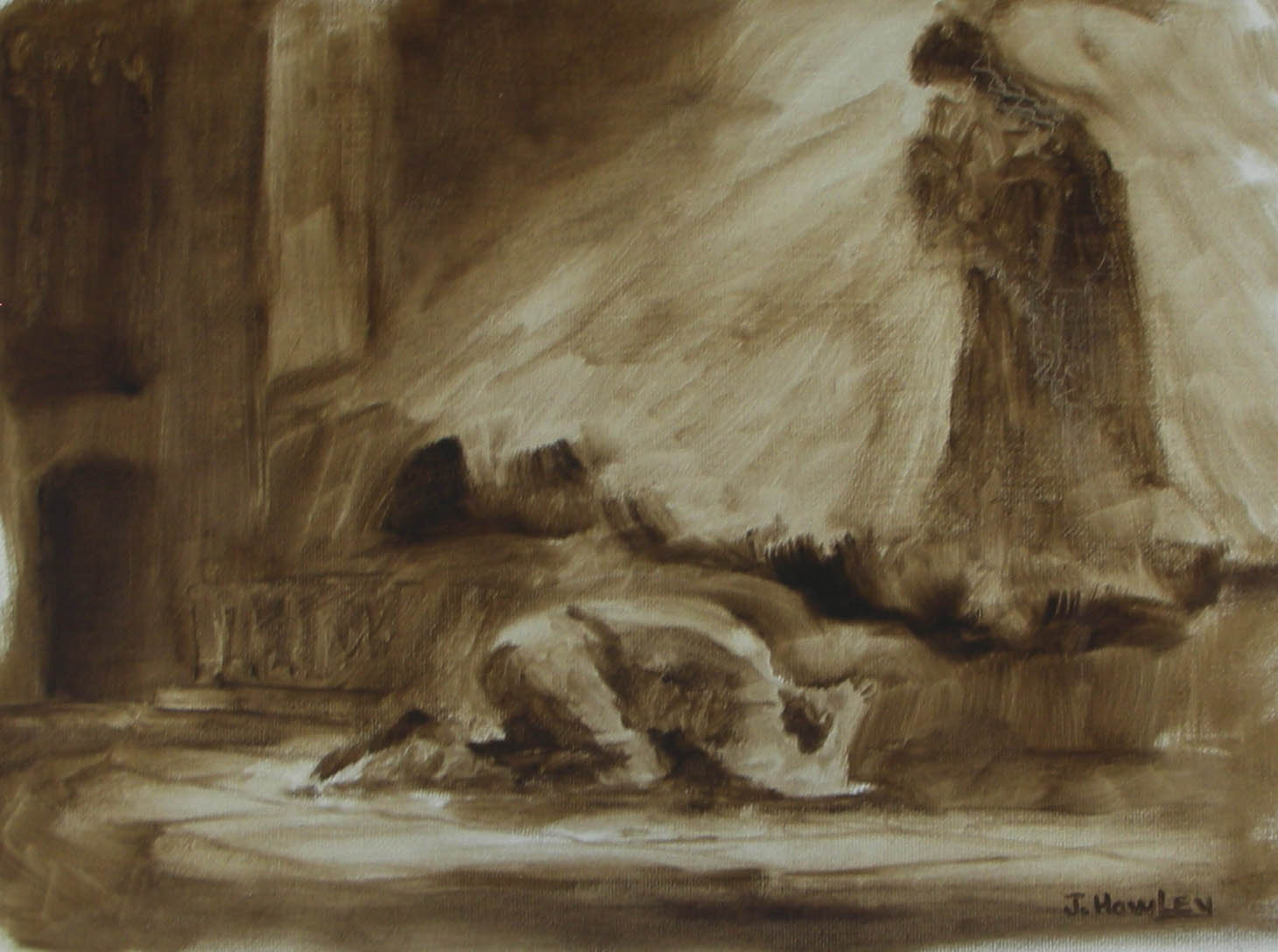
The image above is a mural painted on the wall in my exercise room (downstairs at my house).  I had a young man in my ward paint this scene (among others) as he was looking for some artist work while preparing to go on his mission.  At some point during the COVID quarantine times, our family – like many others – engaged in some Marco Polo app shenanigans which somehow ended up in me doing some pushups in my exercise room, which then prompted a question about the wall (that was apparently visible in the background), which led to me showing this to my siblings and parents explaining what each scene was (there are 3 main scenes and 1 large collage) a la MTV cribs.  While I was explaining what this scene is (and why I had this young man draw this event) it apparently was something of a prompt for Colby, since we discussed this topic briefly, and he then wrote a blog post that included this story from Alma Chapter 43.

Now that enough time has passed since then, I thought it would be timely to relate what I feel is the reason behind this scene (why I love it so much) as well as several related stories that help reinforce the idea of what is being portrayed.  In each case, there are key phrases that I hope will resonate and work together to shape and add color to the full, wider, more comprehensive picture.  After all, isn’t a painting just a form of symbol (object, event, action, or teaching that represents a spiritual truth) that teaches much more than words ever can?

Imagine in your mind the infographic that Elder Bednar used in his conference address in October of 2018 that shows multiple principles or individual braids being wound together to make the strands of a strong rope – the idea of several interrelated actions being part of a unified effort to better align the focus (or understanding) of a principle.  In his words “as we learn and link together revealed gospel truths, we are blessed to receive precious perspective and increased spiritual capacity through eyes that can see the Lord’s influence in our lives….”  With that in mind, here are several related stories or passages. 

I

The first passage is found in Alma 53:13-15.  In this part of history, the Anti-Nephi-Lehi people were considering breaking their oath/covenant to bury their weapons of war and not fight against the Lamanites.  This near break of their oath came because “they saw the danger, and the many afflictions and the tribulations which the Nephites bore for them, [and] they were moved with compassion and were desirous to take up arms in the defence of their country.”  At this time, there was quite a bit of dissension and intrigue among the Nephites and their desire to help was understandable. However, when Helaman was able to persuade them to keep their oath, and to not take up their arms in battle, the record reads “therefore all those who had entered into this covenant were compelled to behold their brethren wade through their afflictions, in their most dangerous circumstances at this time.” Just read that again, understanding what it means, and don’t forget that wading is typically used when we are out in the water quite a bit right?  It’s not a toe dip or an ankle dip or standing on the beach and experiencing the waves peacefully lap and cover your feet – it’s wading through afflictions.  

In other words, by keeping and honoring their oath (which the Nephite leader encouraged them to do, they were compelled to behold their loved ones – in their most dangerous circumstances.

II

The second related story comes in Alma chapter 14.  It’s where Alma and Amulek are preaching in the city of Ammonihah and the judges/leaders/lawyers of the city resist the teachings, and go as far as casting out believers, only to then bring wives and children together to the place of martyrdom and force Alma and Amulek to witness the destruction of those whom were consumed by fire.  Amulek understandably asks “How can we witness this awful scene?  Let us stretch forth our hands, and exercise the power of God which is in us, and save them…”  But Alma says “The Spirit constraineth me that I must not stretch forth mine hand”…

III

The third scene is the one Colby referenced and that is illustrated in this painting from Alma 43.  It’s the story of the Nephite army strategizing in order to create the best possibility of victory over their Lamanite enemies.  In this case, Lehi was leading his army and his pre-determined role was to ensure that as the Lamanite army began to cross the river Sidon, he and his army would appear and encircle them about on the east in their rear.  There was a battle at this point, mainly to make sure that the Lamanites could not go back the way they had come, forcing them to cross the river.  But Lehi’s standing order was to “retain his armies upon the bank of the river Sidon” That was it.  Simple enough and clear enough when you read the whole story (since we know the Nehpites win this battle).  

What we forget sometimes is that this was Moroni’s very first battle as chief captain (that we know of, since he was just named chief captain earlier this chapter, and he is only 25 years old and there may have been a bit of apprehension among the army).  In addition, let’s remember that Lehi had to sit and watch as this Nephite army was “about to shrink and flee” as they nearly gave up and lost the battle.  Just imagine that  – really imagine that.  I know this painting shows Lehi standing, but I like to think he was kneeling literally at the very edge of the shore and pleading with the Lord while watching and hoping and feeling completely torn about what to do as he watched his brothers in a fierce battle.  I can guarantee that he had the thought to just cross the river and help – but he didn’t.  He watched.

IV

In Alma chapter 58, there is a great phrase used by Helaman in his letter to Moroni.  He is detailing the happenings of his little band of warriors, and indicating that they had desires to obtain the cities which were currently in the possession of the Lamanites, but because of various reasons he writes “it became expedient that we should wait, that we might receive more strength…” 

V

This fifth story might be one of my favorites, and certainly one to round out the idea of this pattern.  In Alma 55 we have Moroni exchanging letters with Ammoron about possibly trading prisoners.  Since Ammoron refuses to comply with Moroni’s conditions, Moroni devises a plan to free them on his own, but how he does it is worth serious study.  The basics are that he provides wine – prepared in its strength – to make the Lamanites merry and drunk, but not so that he can slay them, only so he can sneak in and provide his people (the Lamanite prisoners) with their weapons.  In verse 16 it says “this was according to the design of Moroni.  And Moroni had prepared his men with weapons of war…while the Lamanites were in a deep sleep and drunken, and cast in weapons of war unto the prisoners, insomuch that they were all armed.  Yea, even to their women, and all those of their children, as many as were able to use a weapon of war,… and all those things were done in a profound silence.”  I’ve written about this phrase previously, which is great, but what I want to point out in this post is what happens next.  Because the record clearly states what Moroni’s purpose or desire was, and it wasn’t to slay the Lamanites, and it sounds like it wasn’t even to free the prisoners (since he could have done either of those things while they were drunken and asleep).  His desire was apparently to arm “those prisoners of the Nephites whole were with the wall of the city, and had given them power to gain possession of those parts which were within the walls.”  His whole desire was to arm his people so that they could fight their own battle from inside the city.  What?  Don’t believe me?  Read verse 21 which says “then he caused the men who were with him to withdraw a pace from them, and surround the armies of the Lamanites.”  After providing his people with their own weapons, he backed up, waited for the enemy to wake up, and let them fight their own battle.  Amazing.  

Summary

In each case, we can learn a valuable lesson, but my purpose in highlighting these stories, and what they mean to me as a father, is that sometimes all we can do is watch, and that does NOT mean that watching is the last ditch effort when everything else has failed, it may be the active result or requirement of keeping our oath, or part of the test of mortality for us.  It might very well be the first or best option of all in moving forward.  It creates strength, confidence, trust, patience and gives experience.  Plus, it inspires all of those who watch or read the stories in the future.

The last connection I will make to this idea comes from another favorite chapter (Jacob 5).  This entire chapter includes  incredible counsel and context for us to consider.  I include this mostly so that nobody assumes I am suggesting we arm our children and youth with a dagger or sword when they are 8 and then promptly withdraw a pace or a mile and watch thinking all our work is done.  That’s not quite it.  It is a case by case, battle by battle decision (in conjunction with the spirit’s direction) as they grow.  This instruction reads “wherefore dig about them, and prune them, and dung them once more… then shall ye prepare the way for them, that they may grow.  And as they begin to grow ye shall clear away the branches which bring forth bitter fruit, according to the strength of the good and the size thereof…” (v 54-65).

Notes

There are more stories that illustrate this principle, such as Lehi and Sariah waiting and waiting in the Valley of Lemuel for their sons to go back to Jerusalem – twice.  There are many other situations in the war chapters where there is a stratagem devised that involves waiting and watching.  It’s also of value to study how and why they utilize spies in these battles.  Each of them can support this idea of sometimes the best and sometimes the only approach is that we are compelled to behold, or withdraw a pace, or it’s expedient that we wait.  

Learning a New Language

Recently, we’ve heard a lot from President Nelson about the importance of personal revelation, and in hearing the voice of the Lord.  In fact, there was an entire campaign with the tag line of HearHim leading up to the conference, which has hopefully carried into these interesting COVID related times where some of us are still doing at home church, or a hybrid version of at home and in person church.  This, in conjunction with the Come Follow Me initiative has all of us hopefully striving to really hear the voice of the Lord among all the noise.  

For most of us, hearing someone speak is a very simple process, especially when they speak our language (common, everyday english).  But revelation is a different type of language altogether right, so it makes sense to review a few helpful rules about what it takes to learn and speak and understand a new language.  

  1. There are no secrets and no shortcuts.
  2. Connect with a native speaker.  The best way to learn a new language is to speak it.  Too often, people spend time studying grammar and memorizing lists of words instead of actually practicing.  
  3. Study the language every day.  If you want to learn a new language, you have to commit to studying the language – every day.  Language learning is based on repetition (hammering something into your brain over and over again) until you remember it. 
  4. Carry a dictionary at all times.  You need to be able to consult it quickly, whenever you need a word (or some insight).  In addition, looking up a word (or principle) and using it immediately in a sentence will help you commit the word (or principle) to memory. 
  5. Watch, listen, read, and write in your chosen language.  Immersing yourself in a language means doing ALL of the activities you would normally do in your native tongue, through the eyes of your new language.  Change your language settings completely….
  6. Visit a place where your new language is spoken.  Visit, and spend time there.  Force yourself to interact, or by simply saying hello. You will gain a new appreciation of the language and it’s speakers (those who have spent the time necessary to learn this new language).

A Key Word

There is a key word that will help us understand how this new language can be learned and understood (and maybe more importantly, how long this process should take and what it may look or feel like).  That key word is wrought.  This word is used in several different passages of scripture, and very often is used when defining exactly how the spirit worked on an individual, or influenced an individual’s actions – over time.  

This is helpful because sometimes we read the scriptures and it says something like ‘and it came to pass that the Lord spoke unto me and said’…. or indicates a set of instructions that were given and we may think the voice of the Lord came to these prophets in a conversational dialogue similar to how we humans and friends talk to each other. While that does and has happened, and is sometimes very specific – it is probably very rare. The more likely case is that these prophets condensed a significant amount of questioning, pondering, searching, and time that passed into a single verse years after the actual event occurred (they weren’t engraving the plates in real time on a day to say basis). In other words, the “and it came to pass” is just as important as what follows it, and the characters that we all love in scripture had to learn this language as well.

Some examples of this principle and this key word include:

1 Ne. 13:12 the Spirit came down and wrought upon (the man)…

Ether 12:14-16,18 it was faith that wrought a change upon the Lamanites

Mormon 9:16-19, are not the things that God hath wrought marvelous in our eyes?

4 Ne. 1:5,13,29, there were great and marvelous works wrought by the disciples of Jesus

Moroni 7:37, it is by faith that miracles are wrought

Alma 5:12-13, there was a mighty change wrought in his heart

Moroni 6:4, wrought upon and cleansed

That is just a few of the many many examples of that word being used in a very specific and very consistent way throughout the scriptures.  Pay attention as you read and you’ll be surprised at how often that particular word is used.  

We probably all know what wrought means (generally), but what does it mean specifically?

The definition of ‘wrought’ is 

  1. (in metal work) = beaten out, or shaped by hammering.  
  2. (material or mixture) = bring to a desired shape or consistency by hammering, kneading, or some other method.
  3. Move or cause to move gradually or with difficulty into another position, typically by means of constant movement or pressure
  4. (joints in a wooden ship) = loosen and flex under repeated stress

This doesn’t sound to me like it works immediately or is touched one time and molded into the perfect shape. In fact, it sounds like it requires quite a bit of consistent hammering, kneading, pressure, beating, loosening and flexing, etc.  In other words, learning what is being said in this language is oftentimes a slow, gradual mistake prone process that gets closer and closer to the desired shape as time goes on.  Of course it is, and understanding this or any other language in its fullness or becoming fluent takes even longer and more practice.

This key word important because it is used so consistently as it relates to how the spirit influences us and how things and changes are accomplished; and because “the words and the way they are used in the Book of Mormon should become our source of understanding and should be used by us in teaching gospel principles”2 (Ezra Taft Benson)

Conclusion:

If you’ve ever learned a new language, the beginning stages are completely awkward and foreign, and you initially feel like there is literally no way and no hope of ever understanding a single word.  Yet, as time passes, and your effort remains consistent, soon you find yourself understanding a few things here or there, and then eventually you recognize things instantaneously rather than having to translate this new language word by word.  So, as we begin this process, and as we try our best to learn this new language, let’s remember the rules…. And the key word, that it is being wrought upon us.

But this time think of them as learning to recognize the language of revelation.  

  1. There are no secrets and no shortcuts.
  2. Connect with a native speaker.  The best way to learn a new language is to speak it.  Too often, people spend time studying grammar and memorizing lists of words instead of actually practicing.  
  3. Study the language every day.  If you want to learn a new language, you have to commit to studying the language – every day.  Language learning is based on repetition (hammering something into your brain over and over again) until you remember it.  (i.e. being wrought) 
  4. Carry a dictionary at all times.  You need to be able to consult it quickly, whenever you need a word (or some insight).  In addition, looking up a word (or principle) and using it immediately in a sentence will help you commit the word (or principle) to memory.  Can you think of a dictionary for the language revelation? I can.
  5. Watch, listen, read, and write in your chosen language.  Immersing yourself in a language means doing ALL of the activities you would normally do in your native tongue, through the eyes of your new language.  Change your language settings completely….
  6. Visit a place where your new language is spoken.  Visit, and spend time there.  Force yourself to interact, or by simply saying hello. You will gain a new appreciation of the language and it’s speakers (those who have spent the time necessary to learn this new language).  

So, if you’d like to start learning this new language, and if you’d like some hints on numbers 1- 6 above, or to review some of the material used by those best at this process – I’ll finish with this quote:  

“I think that people who study the scriptures get a dimension to their life that nobody else gets and that can’t be gained in any way except by a study of the scriptures….a feeling of inspiration and understanding that comes to people who study the gospel… and who ponder the principles, that can’t come in any other way.”       -Bruce R. McConkie

Extra Credit

This post is primarily about learning a new language as it refers to revelation in general, but for extra credit, let’s go this same exact process, but with the assumption that the language I’d like to learn is symbolism.  After all, “God teaches with symbols; it is his favorite way of teaching.”  (Orson F. Whitney)

If that is true, then we not only need to learn the language of revelation, but we need to learn the language that God uses to teach us.  Yes they are connected, and revelation is also required to understand that language, but if I had to give any one person one challenge for their entire life (after the challenge to read the Book of Mormon every day) – it’s this one.  Learn this language.  As you go through the process of trying to learn how to speak that language – things will never be the same.  At some point, I will expand my post from Oct. 2018 to include more on this, but the idea of things being “hidden in a manner that the people did find them” is most appropriate.  

Notes

1 – Watch this video.  It is incredible, and I include it here as a note to make sure that you don’t think I am discounting the possibility of and encouragement for continuous revelation, because as Elder Bednar indicates, it is in fact much more attainable (and even expected) than we may think.  

2 – I have many, but this particular quote is probably my all time favorite. At some point I will have an entire entry (or series of entries) dedicated just to this quote (and what it has meant to me personally over the years), but hopefully the reader can review some of my previous posts and recognize how I’ve used certain words or phrases in my writing that have also been influenced by this idea.

Take, Keep, and Keep

Ancient Records by James Fullmer

Towards the end of the book of Alma (starting in Alma 36), Alma (the younger) documented his final counsel to his sons.  While it’s worth reviewing everything that Alma wrote, there is a connection that I’d like to make as I’ve been thinking about the responsibility we have as parents and/or leaders of the youth these days.  


In Alma 37:1 Alma commands his oldest son Helaman to “take the records which have been entrusted with me”.  Then he also commands Helaman to “keep a record of this people (according as I have done)” and then lastly he says “keep all these things sacred which I have kept, even as I have kept them for it is for a wise purpose that they are kept.”

  1. Take the records
  2. Keep a record (as I have done)
  3. Keep all these things sacred (even as I have kept them)


Alma then spends verses 3-9 highlighting why and how the records are so important, and some of the power that they hold, including the fact that the records are responsible for so many thousands of conversions among the people of Ammon.  Following that, in verses 10-12,  Alma writes about how future generations will also be converted, likely in ways which we can’t imagine – by Helaman obeying these commandments to take and keep these (records) and the commandments that he’d just been given1.  

Then, in verse 14 he says “God has entrusted you with these things”, which is similar to what Lehi told Nephi when he relayed the message to his sons to go back to Jerusalem and get the brass plates.  Alma, is emphasizing to Helaman that he (Alma) is just the messenger, and that any of these commandments aren’t Alma’s – they are God’s.  But then Alma adds an interesting note as he continues, he says “God has entrusted you with these things, which are sacred, which he has kept sacred, and also which he will keep and preserve for a wise purpose in him, that he may show forth his power unto future generations.”   Here, Alma is telling Helaman that God himself has kept these records sacred, and that he will continue to do so.  Just to recap, as it relates to these records, Alma says that God himself has:

  1. Kept them sacred

And God himself will:

  1. Keep them sacred
  2. Preserve them

And he (God) will do this “for a wise purpose in him, that he may show forth his power unto future generations”.  In other words, we don’t really know or need to know the details of the future benefits that will occur by keeping and preserving these records, other than God thinks it’s wise and it will display his power somehow unto future generations.  

This little exchange creates some questions for us to ponder.

  1. Why is it necessary for Helaman to take the records, keep the records, and keep/consider them sacred (even as Alma has done) if God has already been doing and will continue to do that, and he will preserve them anyway?
  2. Why would the Lord (through Alma) give this reminder to Helaman that God has entrusted him (Helaman) with these things (given number 1 above)?
  3. How do the first two questions, and how we’ve answered them help us think about and identify the “wise purposes” that the Lord may be referring to in that same verse.
  4. What is the difference between taking the records, and keeping the records (since Alma used them separately and in that order), and with that in mind, what does it mean to keep them sacred (since that was a different charge altogether), and lastly what does it mean for the Lord to preserve them (is/can that be different than how we preserve them? 

To make sure Helaman really understands what is at stake here, after Alma gives Helaman his charge to take care of the records he clearly outlines (in verse 15) the consequence for not keeping these things sacred, or not keeping the commandments which he’s just given him. Alma says “that if ye transgress the commandments of God, behold, these things which are sacred shall be taken away from you by the power of God, and ye shall be delivered up unto Satan, that he may sift you as chaff before the wind.”  Yikes. No pressure right?

However, despite the necessary warning, the good consequences of obeying commandments outweigh the bad (as always), and Alma says in verse 16 “if ye keep the commandments, and do with these things (which are sacred) according to that which the Lord doth command you… behold, no power of earth or hell can take them from you, for God is powerful to the fulfilling of all his words.”  And just in case we missed that, Alma repeats himself twice more in verse 17 and reminds us that God will preserve them for a wise purpose again just to be safe.  

I would like to point out that there is a very similar promise made to Joseph Smith as he came into possession of some of these records (much later than Helaman did) and is proof that God was still preserving and keeping up his end of the bargain).  It comes from JSH 1:59-60 (which happens to be a footnote in verse 16).  The promise is in verse 59 and the reason for the promise is just as important (outlined in verse 60).  Verse 59 (the promise) reads “ the same heavenly messenger delivered them up to me with this charge: that I should be responsible for them; that if I should let them go carelessly, or through any neglect of mine, I should be cut off; but that if I would use all my endeavors to preserve them, until he, the messenger, should call for them, they should be protected.”

With this (these) promises in mind, I’d like to include verse 60 of the Joseph Smith History to give us an idea of why the Lord needed to make a promise to preserve them.  Verse 60 reads “I soon found out the reason why I had received such strict charges to keep them safe, and why it was that the messenger had said that when I had done what was required at my hand, he would call for them. For no sooner was it known that I had them, than the most strenuous exertions were used to get them from me. Every stratagem that could be invented was resorted to for that purpose. The persecution became more bitter and severe than before, and multitudes were on the alert continually to get them from me if possible. But by the wisdom of God, they remained safe in my hands, until I had accomplished by them what was required at my hand. When, according to arrangements, the messenger called for them, I delivered them up to him; and he has them in his charge until this day…” 

This statement basically gives Helaman an absolutely foolproof promise that if he 1) takes the records, 2) keeps a record, and 3) keeps them sacred, that not only will there be no power in earth or hell that can take them from him, they will be used by the Lord to show forth his power unto future generations.  What an awesome promise for Helaman right?     

Now, let’s review something King Benjamin said much earlier (in a very similar circumstance).  In Mosiah 1 he (King Benjamin) is talking to his sons and says “I say unto you, my sons, were it not for these things which have been kept and preserved by the hand of God, that we might read and understand of his mysteries, and have his commandments always before our eyes, that even our fathers would have dwindled in unbelief, and we should have been like unto our brethren, the Lamanites, who know nothing concerning these things, or even do not believe them when they are taught them…”

I love the phrase these things. I envision Mosiah in his home with his kids (during FHE or Come Follow Me) taking such care of his records and I can see him and his face and his love for the records when he says “these things”.  It’s a phrase that can somehow incorporate years and years of diligent study and care and respect and gratitude that his kids can feel. I think the BoM video also had a flashback that was really good regarding King Benjamin) that sort of fits this idea. 

I also love the phrase “they know nothing concerning these things” because it’s the exact opposite of his love and care for these (same) things.  Here we have Mosiah who is one of the best of the best, a king who serves and teaches truth and righteousness changing the world by changing how his kids feel about small and simple things in a non grandiose, intimate family setting – letting them know in clear terms that not everyone will value them, when he says (referring to the Lamanites) “they know nothing concerning these things”.  I’ve written about the literal and truthful use of the word all in Alma 30:44 and Moses 6:63 (all things testify of him, etc.) so when Mosiah uses nothing – I take it literally as well.  They know absolutely nothing about how powerful and layered and deep and important these records are. They will miss out on literally the greatest treasure this earth has to offer (and they’ll likely be smug and sarcastic and hateful about it all your life) because “the natural man receiveth not the things of the spirit of God, for they are foolishness unto him; neither can he know them, because they are spiritually discerned” (1 Cor. 2:14) and “their wisdom is foolishness and it profiteth them not”. (2 Ne. 9:28).

So, now that we’ve reviewed what Alma’s charge to Helaman was (regarding the records) and how that was so similar to King Benjamin’s, let’s ask ourselves what this has to do with our stewardships as parents or as leaders in today’s world and more specifically, what this has to do with our youth and our charge to assist the rising generation to seek revelation, exercise agency, build relationships, and follow the Savior in all areas of their lives.

We can review the same questions above, but ask ourselves what ‘records’ we could have charge over (our own children, quorums, classes, families, responsibilities, etc.), and what ‘sacred things’ we should revere. And, maybe most important of all, can this same idea give us a similarly foolproof promise that if we 1) take the records, 2) keep a record, and 3) keep them sacred, there be no power in earth or hell that can take them from us, and that they will be used by the Lord to show forth his power unto future generations?

I don’t have the answers, but I do love the questions, and I can promise that as you ask yourself these questions, and as you ponder what ‘records’ you have charge over, and how you should be taking them, keeping a(n additional) record of them, and keeping them sacred, you will start to get answers for not only what it means, but why the Lord charged Alma with commanding Helaman to do it (like he has done repeatedly in the Book of Mormon) and how that relates to the same tasks that the Lord is doing (keeping and preserving).  

Notes

1 – Reference/Summary of Mosiah 18:30 and the 2 references (Alma 37:9 and 37:10) that Alma uses to take the reader (and Helaman) back to where Alma’s father Alma is fresh off his own repentance and conversion and is teaching the people in the land of Mormon, the place of Mormon, the waters of Mormon, etc. with the point that this phrase is a key to us understanding why the Book of Mormon is named that (and I don’t think it has to do with it’s author/compiler) – he just happened to be named after the same place (which could also explain why he was the perfect choice for that job – and someone who understood the Book’s true purpose, which is to “bring people to the knowledge of their Redeemer”.     

In both verse 9 and in verse 10, Alma references that the word, or the record will bring them (future generations) “to the knowledge of their Redeemer”.  This is a phrase that likely gets overlooked by many, but is a reference back to Mosiah 18:30 – and when we make that connection (what that phrase means, where it took place, and what that place and name means, and who wrote this letter, who recorded this letter, who compiled the book that contains this letter, and where his name came from), you start to realize just how much depth the scriptures have, and really even just this one letter to Helaman.  Then, you connect Alma 36:1, 3, and Alma 37:13 and the use of ‘prosper’ and you start to realize that Alma is giving a sermon here.  Something like what we could consider a patriarchal blessing, which Helaman could have gone back to over and over and over again in order to glean wisdom from.  We (as readers of the Book of Mormon) can do the same thing, because Alma didn’t take the time to explain to Helaman what these references were, nor did he even identify that they were important references at all.  They are hidden gems for future readers to find, which help us appreciate Alma and his knowledge and his heavy use of the scriptures in this blessing to Helaman.

Blind Squirrels and the Search for Everlasting Acorns

yurko-rymar-squirell-new

There is an idiom that references the unintentional stumbling upon a truth, or accomplishment that seems unlikely for the one performing the act. We’ve seen it used frequently in sports, like when Shaquille O’Neal made free throws, or when the Cubs won the World Series, or other such oddities.

It goes like this, “Even a blind squirrel finds a nut in the forest every once in a while.”

I was also the recipient of this dagger when I was just beginning my anesthesia training. I wish I had a nickel for each time I heard that phrase while attempting a spinal block, or intubation by the self proclaimed comedians that were training me.

Other similar, yet not as fun, sayings may be also be used interchangeably. These are the “even a broken clock is right twice a day”, and “every dog has its day” options.

Over the last several years, I have found that this principle can apply to almost any situation. Today, I thought it would be fun to see how this principle applies in music.

Often music can be worthless, distracting, and carry messages that are detrimental. Just go look at the lyrics of the billboard top 100 songs right now…on second thought, don’t do that. But, every once in a while, even a blind squirrel finds a nut in the musical forest.

Enter Willie Nelson.

willie-nelson-ride-me-back-home

As a disclaimer, I am not proposing that Willie Nelson, nor any of his compatriots, are secret purveyors of gospel principles in their musical repertoire. Hence the intro referencing blind squirrels and nuts. But when it happens, it happens.

The other day as I was listening to music in the car (perusing the forest for some nuts), I heard a song sung by Willie Nelson called “Sunday Morning Coming Down”.

Listen here

An interesting fact about this song written by Kris Kristofferson was that it became so popular, that it was covered by at least 14 other musicians. They ranged from Johnny Cash to Telly Savalas (I didn’t even know Mr. Las Vegas sang..?). I guess the message resonated with them…

It was an interesting take on the special nature of Sunday, albeit from the outside looking in. He sang about taking a walk on a Sunday morning, after the “beer [he] had for breakfast“, and “one more for desert“. He went outside to clear his smoke filled head, and noticed that he was missing something in his life. Shocker, I know….

“And it took me back to something that I’d lost
Somehow, somewhere along the way”

He then tries to describe how he came to realize something was missing. This “something” was apparently more obvious on Sundays. In the process of the song, Willie stumbles upon some truths, even though it’s a slightly indirect inferred kind of truth.

“In the park I saw a daddy
With a laughing’ little girl who he was swinging
And I stopped beside a Sunday school
And  listened to the song that they were singing
Then I headed back for home
And somewhere far away a lonely bell was ringing
And it echoed through the canyons
Like the disappearing dreams of yesterday”

“On the Sunday morning sidewalk
Wishing, Lord, that I was stoned
‘Cause there’s something in a Sunday
Makes a body feel alone
And there’s nothin’ short of dyin’
Half as lonesome as the sound
On the sleeping city sidewalks
Sunday morning coming down”

There is something special about Sundays, and about family, and music, and about what we do on Sunday. Sometimes, even those unfamiliar with that special something even recognize it through a smoke filled haze and a beer buzz.

If we want, we can choose to spend our time scouring the musical forest for food, and settle for these occasional nuts, and be happy to survive on the last remaining sip of evaporating rainwater from a hoof-print (True Grit Mr. La Boeuf reference). Or, we can purposefully take our squirrel blinders off, and indulge in the bountiful feast and drink from the fire-hose of good music that is readily available to us.

giphy

To better contrast the difference, let’s look at the nutritional value and level of spiritual satiety we experience between Willie’s nut in the forest song, and one of my favorite Hymns.

“Come, Thou Fount of Every Blessing” is amazing. It is my spiritual entree of smoked brisket, lobster mashed potatoes, mac and cheese, washed down with authentic Brazilian Antartica brand Guaraná. It was “prepared” in 1758 by a 22 year old young man in England named Robert Robinson. Even though the gospel hadn’t even been restored yet, many of the beautiful lyrics in this hymn teach principles of the fullness of the gospel. A gospel that would soon would be restored through Joseph Smith. And it is a full 7 course meal.

If we read the menu from the Mack Wilberg arrangement sung by the Tabernacle choir, we can find some doctrinal pearls hidden inside. Its quite a difference from the tangential inferences that we find in our previous song.

Come, thou fount of every blessing, tune my heart to sing thy grace.
Streams of mercy, never ceasing, call for songs of loudest praise.
Teach me some melodious sonnet sung by flaming tongues above;
Praise the mount, I’m fixed upon it, mount of thy redeeming love.

Here I raise my Ebenezer, hither by thy help I come,
And I hope by thy good pleasure safely to arrive at home.
Prone to wander, Lord, I feel it, prone to leave the God I love.
Here’s my heart, O take and seal it, seal it for thy courts above.

Jesus sought me when a stranger wandering from the fold of God.
He, to rescue me from danger, interposed His precious blood.
Prone to wander, Lord, I feel it, prone to leave the God I love.
Here’s my heart, O take and seal it, seal it for thy courts above.

O to grace, how great a debtor, daily I’m constrained to be!
Let thy goodness like a fetter bind my wandering heart to thee.
Prone to wander, Lord, I feel it, prone to leave the God I love.
Here’s my heart, O take and seal it, seal it for thy courts above.

Seal it for thy courts above.

I love these verses for the imagery they creates for me. Who doesn’t wasn’t to associate with, or sing like heavenly angels? Yes, please. I imagine many of us have been in a place where we simply want to be better, and yearn for and hunger to be a part of the peace that we know exists beyond the veil.

One of the most powerful phrases in the song is when the author describes his weakness. He admits that he was “prone to wander” and “leave the God [he] loves”. We have all been there. We have all had moments, despite our love of the gospel, our Savior, and our Father in Heaven, that we have wandered. I love that in the very next sentence, the author offers his heart, and then begs the Lord to take it, and “seal” it to Him.

pleading

In the subsequent stanza, the words “bind” and “like a fetter” are also used to describe the relationship the author sought with God. This is the part that I think I love the most.  It is the juicy, tender, and delicious part of the meal…

These phrases are colorful metaphors of the covenants we seek and receive in the temple.

The temple covenants, especially the sealing ordinance, teach us, and remind us of our potential, and worth to our Father in Heaven. They can also elevate us from any feelings of inadequacy, or unworthiness. What a completely nutritious meal that is. If we let that sink in and digest, it is incredibly satisfying.

This recipe is not new. The feeling that Robert Robinson put into words in 1758 is a hunger that has been on the earth from the beginning. We only need to read a few chapters into the Book of Mormon before we see this same sentiment expressed by one of the strongest, most faithful prophets that has ever lived.

“Nevertheless, notwithstanding the great goodness of the Lord, in showing me his great and marvelous works, my heart exclaimeth: O wretched man that I am! Yea, my heart sorroweth because of my flesh; my soul grieveth because of mine iniquities.

I am encompassed about, because of the temptations and the sins which do so easily beset me.

And when I desire to rejoice, my heart groaneth because of my sins; nevertheless, I know in whom I have trusted…

…And by day have I waxed bold in mighty prayer before him; yea, my voice have I sent up on high; and angels came down and ministered unto me.

And upon the wings of his Spirit hath my body been carried away upon exceedingly high mountains. And mine eyes have beheld great things, yea, even too great for man;…

Awake, my soul! No longer droop in sin. Rejoice, O my heart, and give place no more for the enemy of my soul.”

-2 Nephi 4:17-28

Nephi was able to rejoice after wading through his feelings of inadequacy and falling short. He saw the end from the beginning let’s remember. How difficult would it be to continue trying to teach, encourage, and invest in those around him when he knew that his entire posterity would eventually fall? He saw it. Yet, the deliciousness of the gospel, and the atonement satiated him so completely that he was able to rejoice despite his prophetic knowledge.

I hope we can all find inspiration, encouragement, and fulfillment in the hymns, poems, and scriptures to help us feel more fed, and “sealed” to God. Especially in these times when we all feel so disconnected from each other.

I hope we look to the best sources when we are hungry or thirsty for meaningful sustenance. I hope we strive to receive, or actively remember receiving the sealing ordinance and its promised blessings.

It is ultimately in the temple ordinances, where the earnest hopes and yearnings expressed in Robert Robinson’s hymn are realized.

It is through the atonement of our Savior that the rejoicing described by Nephi can be experienced, and our hunger truly satiated.

Therefore, in the ordinances thereof, the power of godliness is manifest.”

-Doctrine and Covenants 84:20

For my soul delighteth in the song of the heart; yea, the song of the righteous is a prayer unto me, and it shall be answered with a blessing upon their heads.  Wherefore, lift up thy heart and rejoice, and cleave unto the covenants which thou has made.”

-Doctrine and Covenants 25:12,13

On the Beach Beyond our Reach

river

If we go the very familiar story of Captain Moroni in chapter 43 of Alma, we learn about his brilliant strategy to defeat the massive Lamanite army led by Zarahemna. Moroni, although severely outnumbered, had done everything in his power to better prepare his Nephite army to go up against the invading Lamanites. He had prepared his soldiers with thick clothing, breastplates, head shields. He also sent spies to watch the movements of the Lamanites. He didn’t just prepare physically, but also sent a petition to the prophet, Alma, to pray and ask the Lord for help in knowing where to go, and what to do in order to protect his people.

Alma did help by inquiring of the Lord and receiving inspiration. He then sent word as to where the Lamanites would be attacking. Moroni then devised a specific plan in order to maximize the Nephite’s effectiveness, and minimize the number of casualties that both sides would suffer.

He split his army on both sides of the River Sidon, and hid part of his army surrounding a valley on the far side. He assigned Lehi, a skilled and fearless captain, to hide and lead the Nephites on the near side of the River.

As the Lamanites approached the river, and passed the hidden army of Lehi, he attacked and quickly drove the Lamanites into and across the river, to where Moroni was waiting. A huge battle ensued. Even though the Nephites were better prepared, and had the advantage of surprise, the Lamanites nearly defeated them.

I never really thought about this whole scene from Lehi’s perspective. He and his soldiers had maintained their position and remained on the opposite bank of the river and had not taken part in the battle between Moroni and Zarahemna. He had to watch and wait.

And Lehi retained his armies upon the bank of the river Sidon that they should not cross.

-Alma  43:40

Lehi had fulfilled his assigned duty which was to drive them across the river. I imagine it would have been extremely hard to stand back and watch as the events unfolded, close enough to see, but beyond his reach, and out of his control. Im sure he wanted to step in, especially as the battle looked to be lost.

I think many of us at times may feel the same way as Lehi did in that moment. Possibly we feel that was as parents standing back as our kids get older and start making decisions on their own. It may even feel like they are just beyond our reach, or out of our control or influence.

We may feel the same was as employees or employers amid business shutdowns secondary to the pandemic. These are devastating and have nothing to do with our own hard work, or how well we do our jobs. Yet, we often struggle and suffer.

Some things are simply out of our hands.

Some of the lessons we can learn through this difficult time have to do with the elusive twin virtues of patience and trust.  We are all important parts of a grand master plan that our Heavenly Father is orchestrating. We are here to learn.  Sometimes the lessons come in ways we don’t understand. We simply have to do our best to trust in the Lord and his timing.

We can learn from the experience of Joseph Smith and his unfair incarceration in the Liberty jail. His fate was completely out of his hands, even though he had done everything in his power to do what was right. But still he was forced to endure some of the most excruciating moments of his life.

Even in those difficult moments, he received revelation, and assurance from the Lord. He learned the lesson that he shares with us through Doctrine and Covenants section 122, that…

All these things shall give thee experience, and shall be for [our] good… Therefore, fear not… for God shall be with you forever and ever.

-Doctrine and Covenants 122:9

Our Heavenly Father and Jesus Christ are with us. Sometimes they feel closer when we demonstrate our complete dependence and reliance on them. Sometimes it takes an excruciating event to catalyze these feelings. Sometimes we are at our most humble and receptive when we do lose control, and are left with no option but to trust and rely on the plan our Father in Heaven has for us.

Let us choose to trust in Him, and show as much patience as we can so that we may also hear the same words that soothed the heart of Joseph Smith…

Peace be unto thy soul; thine adversity and thine afflictions shall be but a small moment.

-Doctrine and Covenants 121:7

Effective Perspective

Discovering-Truth-Thumbnail

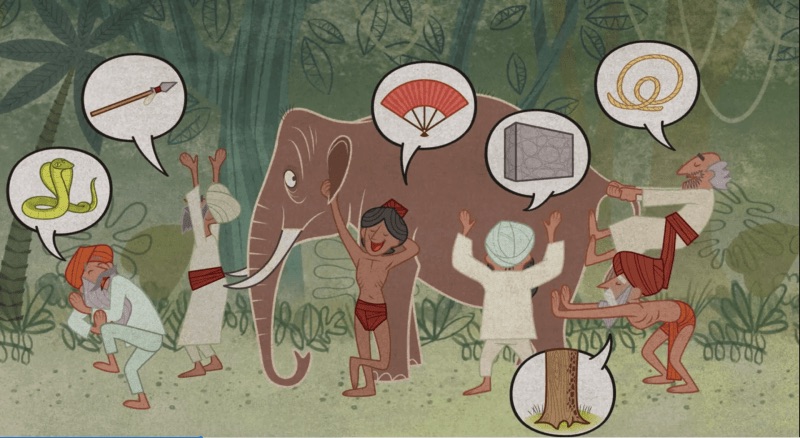
In 2013, Elder Uchtdorf shared a poem written in 1872, by John Godfrey Saxe about the Six blind men of Indostan who went to see an elephant. Each man touched only a single part of the animal, the ears, tail, leg, etc., and then attempted to describe the whole animal. Although accurate in their particular portion of the elephant they had touched, when they attempted to describe the whole animal, they were all wrong. They were simply unable to see the complete picture. They lacked the proper perspective.

For many of us, it may be equally difficult to see the big picture when we are engrossed in our daily grind, and focused on the struggles we may be experiencing. These last few months have provided plenty of opportunities to struggle. 

Paul encouraged patience in our perspective when he said, “For now we see through a glass darkly; but then face to face; now I know in part; but then shall I know even as also I am known.”

-1 Corinthians 13:12

It can be enormously difficult to see through the “glass darkly” to understand our big picture, or the nature of life’s elephants given our limited view. It is difficult or even impossible to understand the reasons for the struggles we face. Especially when they are completely overwhelming. 

We read of another example of this in the Book of Genesis.  After Adam and Eve had partaken of the fruit, and had been sent forth out of the Garden of Eden, their life had obviously changed. The easy life was over. The struggle had just begun. The days of ease and plenty had suddenly come to an end. 

The Lord explained their change in scenery this way…

“I will greatly multiply thy sorrow…

Cursed is the ground for thy sake; in sorrow shalt thou eat of it all the days of thy life…
Thorns also and thistles shall it bring forth to thee…

In the sweat of thy face shalt thou eat bread, till thou return unto the ground;
for out of it was thou taken:

for dust thou art, and unto dust shalt thou return” 

-Genesis 3:16-19

At first glance, this seems like a severe punishment, or banishment into a life of misery, from which there could be no relief nor hope for happiness. It would be hard to see it any other way. 

But, there was a little sprinkling of a hint that suggests another possible motive. The Lord stated that He would multiply their sorrow, and that the curse would be “for [their] sake”. And, if we keep reading, only a few verses later, the Lord opens our eyes to the proper big-picture perspective, which is His perspective.

And the Lord God said, Behold, the man is become as one of us…”

-Genesis 3:22

The Lord saw the Fall of Adam and Eve as progress towards becoming more like Him, not moving further away.  Maybe the obstacles in our paths aren’t stumbling blocks alone, but can also serve as steps that continuously lead us up and forward. 

In Hebrews, Paul teaches about how, and why, the Lord often intervenes in our lives. 

As we read these verses, let’s maintain the belief that the Lord has our well being and divine development in mind. Let’s swap out the word “chastise” and replace it with the word “challenge”, and see if it helps us realize what the Lord is trying to accomplish. 

“…My son, despise not thou the [challenging] of the Lord, nor faint when thou art [challenged] of him: 

For whom the Lord loveth he [challengeth], and scourgeth every son whom he receiveth. 

If ye endure [challenging], God dealeth with you as with sons; 

for what son is he whom the father [challengeth] not?

Now no [challenging] for the present seemeth to be joyous, but grievous: 

nevertheless afterward it yieldeth the peaceable fruit of righteousness unto them which are exercised thereby. 

Wherefore lift up the hands which hang down, and the feeble knees.”

-Hebrews 12:5-12

It has been a rough few months, but let’s us lift up our hanging hands, strengthen our feeble knees, and maybe try and expand our view to account for the eternal perspective. The Lord loves us.  He sends us challenges to overcome in order to help us develop into our best selves. 

Just this week, in our come follow me lesson, Alma counsels us that we…

“…should be humble and be submissive and gentle; easy to be entreated; full of patience and long-suffering; being temperate in all things; being diligent in keeping the commandments of God at all times; asking for whatsoever things ye stand in need, both spiritual and temporal; always returning thanks unto God for whatsoever things ye do receive.” 

-Alma 7:23

I know that if we keep our eyes open to the Lord’s eternal plan for us, and allow ourselves to be changed into who we can be, we can look forward to hearing the words from Heaven, just as our first parents did,  that we have “become as one of [them]”

Close Your Eyes that Ye May See

Brother of Jared

The last few months have been the quite a ride. If we listen to the different sources of news and even look outside, there is such a torrent of information. Most of the time, it is conflicting information. Our world, it seems, is in a constant back and forth as to what is true and what isn’t. What is right, and what is wrong. This seems contrary to what our Father in Heaven wants for us. 

“For God is not the author of confusion, but of peace”

– 1 Corinthians 14:33

These situations make it difficult to know exactly who, or what, to believe. This sets the table for massive confusion, uncertainty, doubt, and anxiety. The world needs a source that we can trust and have full confidence in.  

Our Father in Heaven is that perfect source. And He has already promised to help!

If any of you lack wisdom,  let him ask of God, …and it shall be given him.”

-James 1:5

I love the story of the Brother of Jared. We can learn so much through his experiences, and his example. He has shown us exactly how we can receive the knowledge, or revelation, and gain the assurance of what is right and wrong. This can help guide our day to day life decisions, as well as help us through the confusion of the outside world. 

We don’t all have the same problems as the Brother of Jared. He had to come up with a way to provide light for eight windowless homemade boats. This light had to last enough to travel across (or even through) the “raging deep” to a distant promised land.  

But, sometimes our problems seem just as difficult to navigate. 

In Ether we read how the Brother of Jared approached the Lord, and why he received an answer to his request. 

“Behold, O Lord, thou hast smitten us because of our iniquity, and hast driven us forth, and for these many years we have been in the wilderness; nevertheless, thou hast been merciful unto us. O Lord, look upon me in pity, and turn away thine anger from this thy people, and suffer not that they shall go forth across this raging deep in darkness; but behold these things which I have molten out of the rock.

And I know, O Lord, that thou hast all power, and can do whatsoever thou wilt for the benefit of man; therefore touch these stones, O Lord, with thy finger, and prepare them that they may shine forth in darkness; and they shall shine forth unto us in the vessels which we have prepared, that we may have light while we shall cross the sea.

-Ether 3:3,4

The Brother of Jared approached the Lord in complete humility. He recognized his faults, and  iniquity, and also recognized that the Lord had already shown mercy to him and his people. He also then approached the Lord in faith, acknowledging the power of the Lord to provide light through the stones that he had prepared. 

King Benjamin also encouraged the Nephites to practice this same humility and faith in order to receive knowledge of the truth. 

“…I would that ye should remember, and always retain in remembrance, the greatness of God, and your own nothingness, and his goodness and long-suffering towards you, unworthy creatures, and humble yourselves even in the depths of humility, calling on the name of the Lord daily, and standing steadfastly in the faith of that which is to come, which was spoken by the mouth of the angel.

And behold, I say unto you that if ye do this ye shall always rejoice, and be filled with the love of God, and always retain a remission of your sins; and ye shall grow in the knowledge of the glory of him that created you, or in the knowledge of that which is just and true.”

-Mosiah 4:11,12

I hope we can all do our best to seek knowledge and revelation for our own individual lives from the source of all truth. Especially in this time when the truth seems so elusive. We can have the peace and direction we seek if we approach our Father in Heaven in humility and faith. 

“Learn of me, and listen to my words, walk in the meekness of my spirit and ye shall have peace in me.”

-Doctrine and Covenants 19:23

The Ghost and the Darkness

In 1898 during the construction of a railroad in Eastern Africa, two rogue lions terrorized the construction workers that had been imported to complete the project for several months. These lions weren’t hunting for wildebeest, antelope, or any of their normal prey. They were hunting humans. The large tent camps where the workers were sleeping were prime targets largely because they were so poorly defended. These man-eating lions upended the workers lives. They worked, and slept in constant fear.

According to the records kept by the construction foreman, over 100 men were taken in just a few months. In panicked desperation, the workers hastily constructed thorn bush barriers, lit fires, slept in trees, and did whatever they could to stay safe from the two lions. The lions would come at night under the cover of darkness and were rarely seen until it was too late. Every moment of the workers lives was spent in constant worry and fear of the two rouge predators. Because of their elusive nature, these terrorizing lions became known as The Ghost, and The Darkness. 

IMG_0039 

If we flash forward 122 years to 2020, we are dealing with our own modern day unseen version of a rogue lion. Albeit much smaller. The COVID-19 virus is an unseen force that is wreaking havoc all around us. We can seemingly do very little to protect ourselves from it. Normal barriers, made out of what we typically have available to us, just like the thorn bush walls, are insufficient. The only real way to stay safe is to to stay away from wherever it is, or, have the appropriate protection that is effective against this particular assailant. It has changed our way of life, effected our work, our schools, our routines, and our priorities.

For many of us, it has truly brought some darkness, confusion, and fear. This virus appears as a Ghost, and often leaves Darkness in its wake. Governments, leaders, and people all over are scrambling to find solutions to fight something so small it’s almost inconceivable.

The whole world economy has been shaken, and come to a halt by an organism 100 times smaller than a single bacterium. For being only 250 microns, it seems to have had a massively and inconceivably disproportionate effect on the market demand for one of the most imperative survival items known to man….toilet paper. Who saw that coming? You know its bad when even Costco can’t keep it in stock.

IMG_0040

The hardest thing about fighting off a virus, or apparently, a rogue man eating lion, is that you simply cannot see it coming. You don’t know exactly where it is, you don’t know exactly how or even if you’ll run into it, or from who, or where it’s been, or where it’s going. It can be everywhere, or no where. How do you know exactly when to wear a mask, or wash your hands? When should we wear goggles, or a full on hazmat suit? How do you know exactly when to sleep in a tree, or stay awake til 4:00 am with a gun pointed at the opening in the thorn bush wall? You simply have to be ready, protected and prepared all the time. You cannot take a break.

I guess we could ask the ten virgins about all of this.

Their story in Mathew Chapter 25 tells of a wedding feast, and ten virgins were tasked with the oil lamp welcoming group for the Bridegroom. In those days, the Bridegroom would come to pick up his bride whenever he was able to care for her on his own. It was not a specifically designated time at all. The virgins would have to be ready for his arrival at any time. The parable tells of five foolish virgins that took lamps without any oil, assuming they would have time to fill them. The remaining five wise virgins kept oil in their lamps full and ready for the appearance of the awaited Bridegroom.

Five-of-Them-Were-Wise

“Five of Them Were Wise” by Walter Rane

When the time finally came at midnight, and there was a “cry made¹” announcing that the arrival of the Bridegroom was near, the five which had not brought oil in their lamps, were now desperate. They scrambled and asked to borrow oil from those who were prepared. The wise virgins, earning their name, refused, claiming there wouldn’t be enough for all if they gave up their oil.

The Bridegroom came, and entered into the wedding feast at the very moment the foolish virgins had gone to purchase oil for their empty lamps. They missed it. When they finally arrived and knocked on the door and petitioned entrance, they were denied. The Lord, opening the door said, “Verily I say unto you, I know you not².”

Being ready and being prepared is the only thing we can do. If we wait to prepare until the Bridegroom turns the corner it will be too late. We may find ourselves on the outside of the party holding an empty lamp.

We can wait to put on protection until everyone else around us is sick, but we may develop a cough and a fever in the meantime.

We can sleep on the ground until the guy next to us is missing a limb from a middle-of-the-night lion attack, but we may suddenly and rudely be awakened by that same lion as he runs off with our left leg for his dinner.

The important thing about viruses, or bridegrooms, and maybe even lions, is that you need to be ready for them yesterday, not scrambling around the moment they appear. We need to be prepared, and ready, at all times. Even when no one else is. Sometimes, doing what is right may make us look silly and seemingly out of place in todays world, but it’s the only way to be safe.

So, what exactly are we preparing for? or preparing against?

Today, in the gospel sense, we are preparing for the return of the Bridegroom. We are preparing ourselves to be invited into the wedding feast. And we are preparing against anything that would keep us out.

In today’s world there are plenty of things that would keep us out of the wedding feast, or cause us to miss the return of our Savior. Continuous distractions, procrastination, immorality, pride, apathy and hate are just a few.

Preparing ourselves to be ready is taking all the precautions against whatever hidden lions lay outside waiting to attack in the darkness. It’s completely avoiding, or donning the most protective equipment available against a new deadly virus, or putting on the whole armor of God. It’s becoming more like the Savior and trying to keep his commandments and living by the precepts of His Gospel.

When we treat the threat of losing our spot in the Bridegroom’s wedding feast with he same urgency as we do from contracting COVID-19, or losing our limbs or lives to the Ghost and the Darkness, we are doing it right.

coronavirustreatment1

Medical workers in protective suits tend to coronavirus patients at the intensive care unit of a hospital in Wuhan, China.

 The real eternal threat to us today isn’t two rogue lions, or even a microscopic virus that causes a terrible disease. The most devastating threat is missing our opportunity to be with the Savior when he comes again. Can we even begin to bear the thought of our Savior saying to us, “I know you not²“?

Let’s treat our preparation for that wonderful event with the urgency it deserves. Our eternal survival and happiness depend on it.


To the End Enduring

When all the worldly Lions pace, and creep, in darkness waiting,
How do we escape their bite and ravenous attacking?

How do we survive an unseen foe as it is spreading
And preventing joined humanity once felt through our connecting?

Or, how do we prepare ourselves for wedding feast approaching,
So we can enter in with Him, to live in joyous feasting?

We fill our lamps, prepare ourselves, and others who are searching,
To find the peace, that in Christ lay, because of His atoning.

Believe in Him, and follow Him, fulfill his words proclaiming
To love our God, and neighbor both, while to the end enduring.


  1. Mathew 25:6
  2. Mathew 25:12

The Much Anticipated, Long Awaited, Death of Death

In the movie, Back to the Future II, the bully extraordinaire, Biff, received a gift from his time-traveling future self. This Future Biff gave Past Biff a sports almanac that spanned 50 years. This future sports almanac would eventually help Past Biff place huge wagers on every sports game for the next several years and amass a huge fortune. All because he knew the future.

He had cheated. He had all the information. He had the power of knowledge. All he had to do, was wager on the events because he knew the outcomes beforehand.

remember this scene?

biff-back-to-the-future

Wouldn’t that be nice? How would it be to know the outcome of future events?

In some ways it would spoil the fun of competition. But, what if the outcomes we knew were more meaningful than trivial sporting contests? What if we knew the results of the bigger world events? What if we already knew of the triggering events, or the outcomes of wars, or when an earthquake would hit, or a volcanic eruption, or other cataclysmic events? What if we knew the outcomes of our own difficult life decisions, or challenges? What if we knew the outcome of every scenario including the battle of life and death?

In a way, we do.

And, we don’t need a crazy future uncle Biff or his space-time-continuum-altering almanac. We can know the outcome of Good vs Evil, and Life vs. Death.

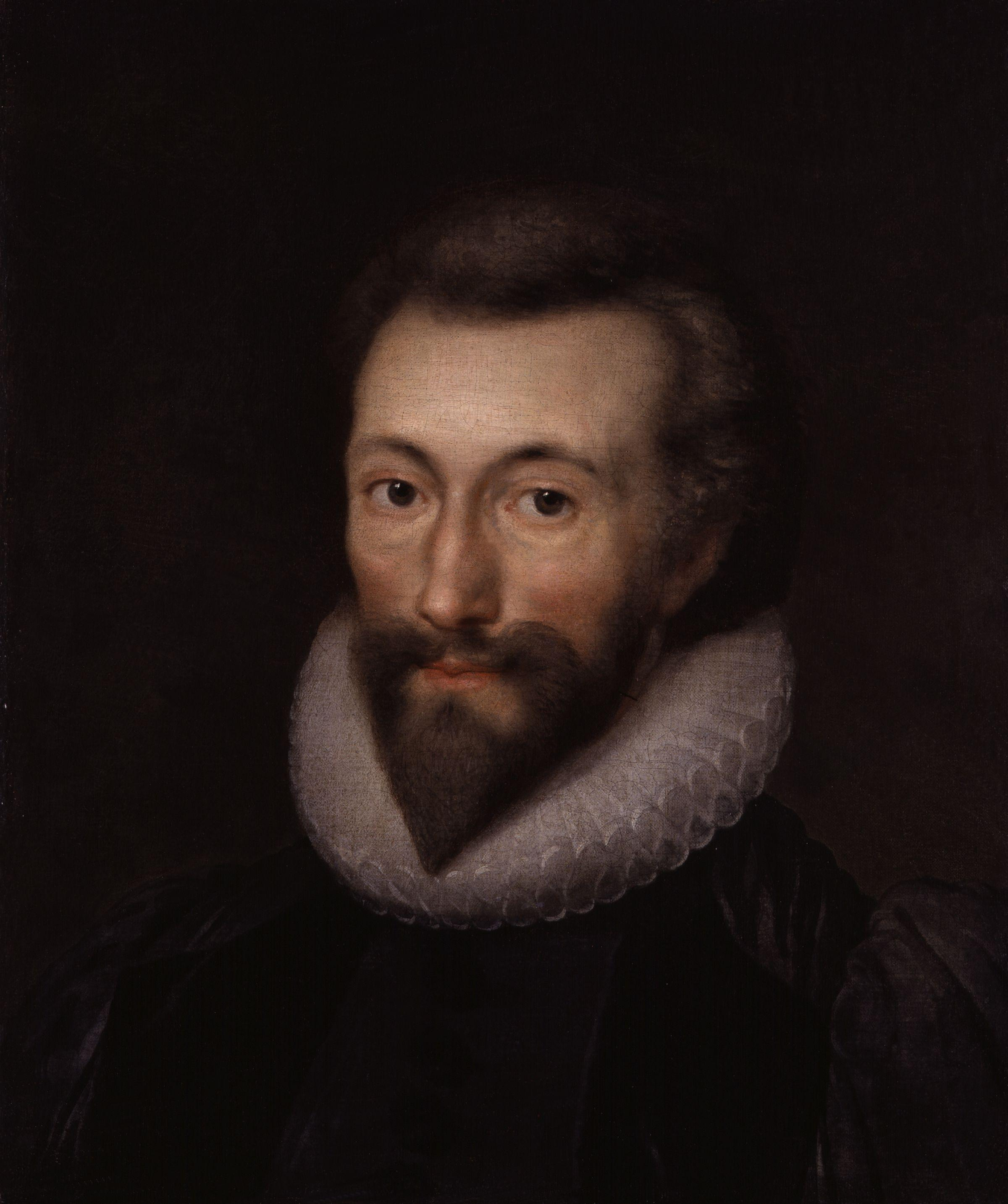
This week I was listening to a book by Tad Callister called The Infinite Atonement. It is excellent by the way. As I was listening, I was impressed by a poem that he quotes while describing Christ’s victory over death as a portion of his Atonement. It was written in the 1600’s by an English poet named John Donne.

John_Donne_by_Isaac_Oliver

John Donne (1572–1631)

Death be not proud, though some have called thee
Mighty and dreadfull, for, thou art not so,
For, those, whom thou think’st, thou dost overthrow,
Die not, poor death, nor yet canst thou kill me.
From rest and sleep, which but thy pictures be,
Much pleasure, then from thee, much more must flow,
And soonest our best men with thee do go,
Rest of their bones, and souls delivery.
Thou art slave to Fate, Chance, kings, and desperate men,
And dost with poison, war, and sickness dwell,
And poppy, or charms can make us sleep as well,
And better then thy stroke; why swell’st thou then?
One short sleep past, we wake eternally,
And death shall be no more; death, thou shalt die.

I loved the last phrase, “Death, thou shalt die.” I have never really thought of death in this way. Who would have imagined the irony that death was alive? Who would have imagined that death could die?  I had thought of death more as an event. I imagined it as something that we all will experience, something necessary, something that is inevitable, with no inherent goodness or badness.

The way it is phrased in this poem, however, explores Death almost as if it were a person, or an idea, or something that is actively trying to claim us. It is portrayed as if it is waging a battle against what would then be its alter ego, its competitor, it’s more wholesome nemesis…Life.

These days, we seem to love stories of superheroes. Maybe we could look at this proverbial battle between Life and Death as the next best superhero story.  “Death” would be like Lex Luthor, the Joker, Thanos, or the big Green Goblin Guy that steals all the super tech from Ironman, etc. “Life” would then be the Superhero that goes largely unnoticed, fights for the little guy, and restores peace and prosperity. Through a series of drastic events, Life would engage in an epic battle with Death, and eventually overcome and heroically bring the world back to normalcy. Life would be the conquering superhero that saves the world from utter chaos, pain and despair.

What if we took that superhero storyline and rephrased it just a little? We could even say that Life would be the hero that saves us from the “pains of Death“. Wow, where have I heard that before? Maybe if we added to the storyline one more time, the Superhero we are calling “Life” could have an introductory line, “I am the way, the truth, the life” (John 14:6)

I guess that in a way, we are living in a world that has a real Superhero. We are all participants in the battle of Good and Evil, and of Life and Death. We also know how it will end.

Like Biff, we have a place where we can read about the battle and the eventual winner. Lets read a few words from the Divine Almanac of Human Events both past and future…the scriptures. This is our cheat sheet where we have access to inside information, and can read about the outcome of this continual war between the two titans- Life and Death.

“For as in Adam all die, even so in Christ shall all be made alive. Then cometh the end, when he shall have delivered up the kingdom to God, even the Father; when he shall have put down all rule and all authority and power. For he must reign, till he hath put all enemies under his feetThe last enemy that shall be destroyed is death.”
(
1 Corinthians 15:22-26)

How have I missed this for so long? Just as the idea in Donne’s poem infers, Death is an enemy, it will be destroyed. It dies. Life will win.

Hosea also leaves little doubt as to the outcome of this epic battle…

“I will ransom them from the power of the grave; I will redeem them from death: O death, I will be thy plagues; O grave, I will be thy destruction…” (Hosea 13:14)

We already know the outcome of the battle and the war. So what does it mean for us? What good does this information bring? Just as it benefitted Biff, we can use this knowledge to benefit us. Because of this, we can have complete and total confidence and faith that we all will live again. We all will. We can have complete and full confidence in being able to see, be with, and enjoy the company of all those who have passed on. Death will die, and Life will live.

Over the last few years in our community, and across the country, we have been too familiar with Death and its plague of painful devastation. It rears its ugly head way too early sometimes. When it happens to come abruptly, or unsuspectingly, it shakes us and our belief. How could it not? It is a surprise attack, an ambush. Death is something that we all think will happen after a full and complete and fulfilling life. When it comes early, it causes us to reexamine all the things we believe, or have believed, or been taught about that happens after we die. We are left with nothing but faith. Death quickly morphs from a future eventuality and screams forward and slams us with its sudden present reality.

As I thought more about this, I began to realize why death is such a difficult enemy to deal with. Although we will all pass through that door, Death is powerful and painful because of the sorrow caused by its separation. We love to be, and long to be with those we love. When we are apart from them, it hurts. Even more so when it comes unexpectedly and abruptly.

This is true with both physical and spiritual death. It hurts. We are separated from either where we want to be, with whom we want to be, or even how we want to be. Does it not also hurt when we ourselves, or a loved one make choices that can bring about spiritual death, or separation from the Spirit?

But, there is good news. We know who wins. We have the Almanac. It is abundantly clear. Death dies. Life lives. Both in physical and spiritual senses.

“Forasmuch then as the children are partakers of flesh and blood, he also himself likewise took part of the same; that through death he might destroy him that had the power of death, that is, the devil;” (Hebrews 2:14-15)

In our Divine Almanac, we can also read about how some amazing people have stared directly into Death’s eyes, and overcome. It can inspire us to exercise patience in developing the faith necessary to do so in our own lives.

In order to face the end of your own life with peace and calm requires a sure understanding and a rock-solid faith. It requires a testimony hardened and engrained so permanently that it is impossible to extract even when Death unsheathes fear as his weapon of choice.

The sons of Helaman had it…

Now they never had fought, yet they did not fear death; and they did think more upon the liberty of their fathers than they did upon their lives; yea, they had been taught by their mothers, that if they did not doubt, God would deliver them.” (Alma 56:47)

Joseph Smith also faced his fate with faithful confidence…

I am going like a lamb to the slaughter, but I am as calm as a summer’s morning. I have a conscience void of an offense toward God and toward all men…” (from the Diary of Willard Richards)

In the Book of Mormon, the Anti-Nephi-Lehis laid prostrate down on the ground in prayer before an advancing vicious Lamanite army and willingly gave up their lives so as to not break a covenant they had made with God to never spill another’s blood again. Imagine the unshakable faith it would have taken to conquer the fear of that moment.

When we are trying our best, yet still suffer through difficulties and tragedies in our lives, we need to understand that we are in good company. We aren’t alone. This battle of life and death has touched almost all of us. We can be assured that our experiences with these events are acknowledged and recorded in the heavens above, and that our “labor is not in vain”.

O death, where is thy sting? O grave, where is thy victory? But thanks be to God, which giveth us the victory through our Lord Jesus Christ. Therefore, my beloved brethren, be ye steadfast, unmovable, always abounding in the work of the Lord, forasmuch as ye know that your labour is not vain in the Lord.”
-1 Corinthians 15:55-58

The sting of death is calmed by the Savior. He won. Life wins. Death dies. His Atonement eliminates the eternal sorrow of separation. He, the Savior, is the one who gives us peace.

“…He hath sent me to bind up the brokenhearted, to proclaim liberty to the captives, and the opening of the prison to them that are boundto comfort all that mourn…to give unto them beauty for ashes, the oil of joy for mourning, the garment of praise for the spirit of heaviness…” (Isaiah 61:1-3)

“These things I have spoken unto you, that in me ye might have peace. In the world ye shall have tribulation: but be of good cheer; I have overcome the world.” (John 16:33)

“He will swallow up death in victory; and the Lord God will wipe away tears from off all faces…”(Isaiah 25:6)

hallelujah-he-is-risen-wayne-pascall

Because of our Ultimate Superhero, our Savior, we are able to overcome physical, and spiritual death. He won. He overcame. Life wins. Death dies. And he invites us to share in his victory with him by and through our obedience to his commandments, and following the precepts of his Gospel.

Because the Savior overcame all, we will all live forever.

Where we live forever, and with whom we live forever, is up to us.

The Gift of Choice

hawkisland25

We have never, since the beginning of time, been compelled to do or be good. We have always been invited to do, or become good. This holds true going all the way back to our the pre-earth life. The essential principle that guides our relationship with God and our progression to be more like him is Agency. It is a divine gift. We will never be compelled to action by God. He invites, inspires, petitions, prompts, nudges, beckons, teaches and leads.

In the Book of Moses we learn more about what happened in the preexistence when this gift that God had already given us, was threatened. Lucifer wanted to force or compel obedience, at the expense of agency, in order to guarantee that, “one soul shall not be lost” (Moses 4:1). We also learn what became of him, at least in part, because of his desire to take away this essential gift.

SONY DSC

Stained glass window in St Mary, Hitchin, England

“Wherefore, because that Satan rebelled against me, and sought to destroy the agency of man, which I, the Lord God, had given him …. I caused that he should be cast down;”
(Moses 4:3)

So, why is Agency so crucial?

Agency, or our freedom to choose, allows for the growth and development of Godly characteristics. No one is compelling God to be God. His character is who He is. He is pure. He is authentic. He is love, He is charity. He is perfect. Because He is pure and perfect, in order for us to become like him, we must develop his attributes. This simply cannot be forced or compelled.

Wherefore, my beloved brethren, pray unto the Father with all the energy of heart, that ye may be filled with this love, which he hath bestowed upon all who are true followers of his Son, Jesus Christ; that ye may become the sons of God; that when he shall appear we shall be like him, for we shall see him as he is; that we may have this hope; that we may be purified even as he is pure…” (Moroni 7:48)

It’s like when I was a kid, my brothers and I would be caught fighting and smashing each other’s faces in the carpet. When this happened, my mom, following the mom code, broke up the fight, and subsequently compelled us to hug each other and say two good things about the other, inevitably “you’re good”, and “you’re nice”.  During those moments, I didn’t really feel sorry. I didn’t really feel that my sibling opponent of the moment was actually good or was actually nice. It wasn’t real. Unfortunately, it was not yet in my character to feel it, or even say it. It wasn’t who I really was to give that hug, and say those things. We were a perfect live example of…

…for if he offereth a gift, or prayeth unto God, except he shall do it with real intent it profiteth him nothing. For behold, it is not counted unto him for righteousness. [if] he doeth it grudgingly; wherefore it is counted unto him the same as if he had retained the gift…If he shall pray and not with real intent of heart; yea, and it profiteth him nothing, for God receiveth none such.” (Moroni 7:6-9)

It was, however, teaching us how we should be.

We gain greater power, or growth when we freely choose faith, and when we freely choose to believe in and follow God and his plan of happiness. This progression and spiritual growth is stunted and inhibited or even reversed when we are compelled to action. Elder Tad Callister wrote, ”There exists an eternal principle—the greater the agency, the greater the opportunity for growth.” (The Blueprint of Christ’s Church)

This growth begins as a result of a desire or yearning to be with our Father in Heaven and Jesus Christ. To be with them, however, requires us to be more like them. This seedling desire then can steer our daily decisions and influence our actions. Our personal desires to emulate our Savior and His character can effect how we view and treat ourselves, our spouses, our own families, and everyone else around us.

We all know the Book of Mormon story of Nephi and the brass plates. Nephi had exhausted all his options to fulfill the Lord’s commandments to obtain the brass plates from their wicked owner, Laban. One night, while following the promptings of the Spirit, Nephi was led to a drunk Laban lying alone in the street. In that moment, he was prompted to slay Laban. He was faced with an enormously difficult situation. The choice before him was to follow the directive of the spirit and slay Laban, or shrink, and disobey. This Laban also happened to be the same man that had stolen his family’s property, threatened them, and even attempted to have Nephi and his brothers killed in their previous attempts to obtain the brass plates.

I imagine the natural man in Nephi had some strong feelings about Laban at that moment. I imagine he might have struggled to know if the promptings he had felt to kill Laban were actually from the Spirit, or if they might have been his own. Nephi had to decide —to obey the voice of the Spirit, or disobey. He would either slay Laban and obtain the plates, or question, doubt, and shrink. I imagine it would have been enormously difficult to trust the feelings and promptings in his heart.

nephi_laban

He took eight full verses to explain these feelings and the honest and difficult conversation he had with the Spirit. Ultimately, he made his choice.  He stated, “I did obey the voice of the Spirit” (1 Nephi 4:18)

I imagine this experience with the whisperings of the spirit taught Nephi a great deal bout how to recognize these intimate promptings of the Spirit. I imagine he learned to trust in God more fully. I imagine this experience effected and guided Nephi with his future choices.

If we fast forward just a few more pages in the Book of Mormon, we learn about the time that Nephi broke his bow while his family was traveling in the wilderness. This fine steel bow had been the only means by which his entire family could obtain food. No bow, no hunt, no food. The family dinner situation had just taken a very bad turn. Even his father Lehi, the Prophet, was complaining. So in this terrible situation, how did Nephi’s past experiences guide his decisions?

88259bff2e3a8262af5cb11b7f7efad3


“And it came to pass that I, Nephi, did make out of wood a bow, and out of a straight stick, an arrow; wherefore, I did arm myself with a bow and an arrow, with a sling and with stones. And I said unto my father: Whither shall I go to obtain food?” (1 Nephi 16:23)

His previous experience had taught him to trust in God. It had helped him build the faith and character that could now trust God enough to fashion a handmade wooden bow, and a single arrow, not a quiver of arrows, but a single arrow, and faithfully and confidently head into the wilderness for food. That is complete trust. Nephi level faith and trust is not built in a day, or built upon desperation or compelled humility. It is built upon consistent righteous choices and experiences over time.

Just like Nephi, our own righteous choices today build the character we need to influence our choices and actions tomorrow.

Perhaps the most difficult aspect of agency and its practical influence in our lives, is when we attempt to honor it as parents when raising our children. At what point do we step back and allow our kids to exercise their gift? When are we teaching, inviting, or beckoning, and when are we mandating, compelling, and forcing?

I won’t attempt an answer here, as I am still working on this one. Im also not sure where the mom code section about making fighting kids hug each other fits either.  I do know, however, that our Father in Heaven lost 1/3 of his children before they even came to earth. He, a perfect Father, still would not compel his children to obey, even at the expense of losing their opportunity to gain a physical body, partake in the Atonement of Jesus Christ, and have a chance at Eternal life.

When we look for an example of a perfect parent, we should look to Him, even when we see our kids choose something other than what we would have them choose. We have to remember that real growth only happens when it is preceded by a free choice.

When we freely choose the right, it means that we have aligned our desire and will to God’s desire and will.

Our choices become a way to test or trigger our own spiritual development.
Our choices become consequences of the character we have developed
Our choices become an outward expression of who we really are, and act as stepping stones in our attempts to develop Godly attributes.

In Hymn number 240 “Know This, That Every Soul Is Free” the lyrics describe this concept perfectly.


Know this, that ev’ry soul is free
To choose his life and what he’ll be;
For this eternal truth is giv’n:
That God will force no man to heav’n.

He’ll call, persuade, direct aright,
And bless with wisdom love and light
In nameless ways be good and kind,
But never force the human mind.

During the earthly ministry of the Savior, he continued to honor the principle of Agency. He never mandated compliance with his Gospel. He taught and lead by perfect example. He loved, taught, then invited

“Wherefore, Hear my voice and follow me, and you shall be a free people…”
(Doctrine and Covenants 38:22)

To the rich young man he beckoned, “…If thou wilt be perfect, go and sell that thou hast, and give to the poor, and thou shalt have treasure in heaven: and come and follow me.”
(Mathew 19:21)

Hoffman-ChristAndTheRichYoungRuler

“Then said Jesus unto his disciples, If any man will come after me, let him deny himself, and take up his cross, and follow me.” (Mathew 16:24)

If we choose to follow the Savior, his Gospel, and his law, He will receive us, heal us, and bless us.

He demonstrated this with the 5,000 who would eventually experience the miracle of the bread and fishes…

“And the people, when they knew it, followed him: and he received them, and spake unto them of the kingdom of God, and healed them that had need of healing.” (Luke 9:11)

In this same way, and still honoring the gift of agency, we are all invited to follow the Savior even today through the teachings of living prophets and apostles. Living Prophets have encouraged the people to exercise their divine gifts of agency and make the choice to follow God from the very beginning…

The Prophet Enoch was instructed to tell the people …

Choose ye this day, to serve the Lord God who made you.” (Moses 6:33)

Joshua famously encouraged, “…Choose you this day whom ye will serve; … but as for me and my house, we will serve the Lord.” (Joshua 24:15)

Today we are experiencing an extension of this same timeless invitation. We have been encouraged to Come unto Christ and come to know him primarily in the safety and security of our own homes. Through his prophet the Lord is inviting us, once again, to…

Come unto Him, to “Learn of [Him] and listen to [his] words, to walk in the meekness of [His] Spirit,… [that we] shall have peace in [Him].” (Doctrine and Covenants 19:23)

The name of the program we now have to study is perfectly named. Our Savior still, as he did in days long ago, opens his arms and invites all of us to “Come, and Follow Me” (Mathew 19:21) and it now becomes our choice, our decision to either follow, or not.

I hope that we all, as individuals, make the choice to accept the Savior’s invitation to follow Him, to learn of Him, and find the peace that only He can bring. As our own testimonies grow, our responsibility is then to strengthen our own families and our own homes. We can make them sanctuaries of peace in an ever more chaotic world. As we ourselves, and as families, choose to be more committed and converted to Jesus Christ and His gospel, we then have the responsibility to invite, encourage, beckon, and lead others along their path towards Him.

Freely choosing to follow and be with our Father in Heaven and Jesus Christ, and to ultimately become like them is the goal.

I hope that we all choose this day to accept the invitation, and follow Him.