Laban Strikes Out

casey

Remember that old poem “Casey at the bat”? It tells of the mighty Casey, the greatest hitter in baseball who famously, and heroically came to bat at the end of a game and had so much confidence, that he let the first two pitches go by without even a second thought to even swing. Then, on the dramatic third pitch in a cloud of dust, he whiffed on the third and final pitch, striking out, and ending the game. He had let two perfect opportunities go by, and when crunch time came, he blew it. The mighty Casey had struck out.

Amazingly, a very similar story took place in real life about 2600 years ago in a little town called Jerusalem. Instead of the mighty Casey, the man was Laban. Lets check out the drama that unfolded.

Laban was an important man in the community, and was known to be kind of a big deal among the Elders of the Jews. He was likely very wealthy, and had in his possession the plates of Brass, which included the Law of the Jews, as well as the record of his entire genealogy down from the first prophets, through Joseph, and all the way to him. These Brass plates would basically be the prize that would go to the winner in the epic “at bat” that took place all those years ago. The mighty Laban at the plate and the humble Lehi as the starter on the mound.

The first pitch from Lehi occurred after he was shown a vision of the coming destruction of Jerusalem. It would be destroyed if its people would not repent. He then went about the city preaching. This first pitch was not received well. The scriptures explain, “And it came to pass that the Jews did mock him because of the things which he testified of them¹”

Now, Laban and all his Jerusalem buddies, the Jews, had decided to mock Lehi, instead of listen. But that wasn’t all, the scripture continues, “And when the Jews heard these things they were angry with him; yea, even as with the prophets of old, whom they had cast out, and stoned, and slain; and they also sought his life, that they might take it away².” Well, the mighty Laban, as well as his friends, decided that they didn’t quite like that first pitch from Lehi, and decided to let that go, and instead opted for attempted murder and death threats. Lehi’s fastball right down the middle, his call to repent and be saved? The mighty Laban decided to pass. Strike 1.

For the second pitch, Nephi took over on the mound, with a fresh arm, and he and his brothers traveled back to Jerusalem from their wilderness hideout. They decided on an even more direct approach, to just go ahead and ask Laban for the plates. Besides, its not like he was actually reading the scriptures or following their teachings right? Worth a try. So, the next pitch was another straight fastball right down the middle. “Hey, Laban, can we just go ahead and have the brass plates?” How’d that go? “And it came to pass that Laban was angry, and thrust him out from his presence; and he would not that he should have the records. Wherefore, he said unto him: Behold thou art a robber, and I will slay thee³.” So, after the second middle of the plate fastball, and perfect chance #2, Laban not only watched it go by, but also threw out a false accusation of robbery, and dished out death threats. Strike 2.

Now, the mighty Laban seemingly was oblivious to the dire situation he found himself in, he had not only rejected the words of the prophets, but he had also threatened to kill them, and falsely accused them of robbery. Both big no-no’s in Jewish law at the time. But, we will get into that later.

The third pitch delivered by Nephi was an even slower, perfectly straight softball floating beach ball pitch. Nephi and his brothers went back to their place, gathered up all their gold and silver in an effort to buy, or trade for the plates of brass. What a deal right? Lehi was likely a very wealthy man, and had a lot of precious things. So the 4 brothers headed in to see Laban again, this time loaded with their treasure, and what happened?… ”[Laban] did alust after it, insomuch that he thrust us out, and sent his servants to slay us, that he might obtain our property4” Nice. So another 4 counts of attempted murder, and armed robbery. Or, in other words, Strike 3.

Laban probably didn’t even realize he was up to bat. He didn’t even swing. The Lord handed him 3 perfect opportunities to do it the easy way, the way that would have left him alive with his head still attached, but he was blinded by lust. Lust for power, and for money.

The story and life of Laban ended a few hours later that night when Nephi was led by the spirit to the street where Laban was passed out drunk. Nephi was constrained to slay him. He shrunk, but eventually did slay Laban by cutting off his head with his own sword, disguised himself in his clothes, and obtained the brass plates for his posterity and fulfilled the commandments of the Lord.

Nephi was commanded to kill Laban. To some, this may seem strange. A righteous prophet commanded to slay another man while he lay drunk in the street? Was that necessary? Lets look at it through 2600 year old eyes.

In 600 B.C. Jerusalem, the laws were a bit different than they are here in the USA in 2015. The “Law” was the law of Moses as it was written in the old testament. And Laban over the months and especially the last few days of his life was certainly breaking many of those laws.

Laban’s first problem was that he was likely among the “Jews” who mocked Lehi, and sought to take away his life. Not exactly living up to “thou shalt not kill”

Laban’s second problem was that he had falsely accused Laman of robbery. Robbery at that time was a capitol offense, or punishable by death. Also, in Deuteronomy 19:18 the law regarding false testimony is spelled out. “And the judges shall make diligent inquisition: and, behold, if the witness be a false witness, and hath testified falsely against his brother; Then shall ye do unto him, as he had thought to have done unto his brother” Wow, so if you falsely accused someone of a capitol crime, guess what? Congratulations, you were guilty of a capitol crime!

Laban’s third problem was a combination of his 1st problem and his second problem. He actually had committed robbery, and actually had tried to kill Nephi and his brothers. Capitol offense, capitol offense. This is starting to be like OJ driving away in a white bronco.

So, in many ways, Nephi, who did not want to kill Laban, as was demonstrated by his entering into the city unarmed, and shrinking when the spirit constrained him to do it, was, in essence, carrying out the legal punishment for Laban’s crimes, even though he didn’t necessarily want to.

This story is a perfect example of how the Lord is in perfect control of every aspect of his plan for his children. He gave Laban plenty of chances to play nice, but he didnt. It also demonstrates how the Lord will always prepare a way for his children to succeed if they rely on him. The Lord provided the way for the brass plates to come into the possession of Lehi’s family, and did it in a perfectly planned out and fair way. God bless Nephi for following the promptings of the spirit even when it was very difficult to do.

I hope each of us can develop the amount of confidence in the Lord, and in ourselves to follow the spiritual promptings we are given. If we do, we never know what hidden blessings are in store for us or our family further down the line..


1 1 nephi 1:19

2 1 nephi 1:20

3 1 nephi 3:13

4 1 nephi 3:25


Engraving upon plates

bomtc-day-85-june-30moroni-10-or-pages-530-531-moroni-buries-the-plates-5

Remember all the times that the ancient Book of Mormon prophets explained how easy and fun it was to engrave their history and teachings on the plates?  I don’t.  What I do remember is all the times that they reminded us how horribly difficult and awkward it was to engrave anything on the plates.  It wasn’t like they could just grab a pen and jot down some thoughts at the end of the day that would stand the test of time being passed down from generation to generation and then spend 1,400 years in a cement box buried in the side of a mountain. The ancient prophets had to “labor diligently” to engrave anything that they really wanted us to have as part of our record.  Jacob (Nephi’s brother) told us very plainly that “I cannot write but a little of my words, because of the difficulty of engraving our words upon plates”.1

Engraving is much different than writing.  The ancient prophets could write on scrolls, papers, banners, fabrics, flags, skins, clothing, etc. and whatever other materials they had available – but to engrave anything on the plates or to make sure that their words would be heard – they had to “labor diligently.”   I think of them maybe tracing out what they want to write with a pen/pencil/paint/ink or some other marking device, and then following over that same line 432 times with a chisel or some other type of tool so that it becomes indented or etched into the plates.2

It’s no different for us today right?  We can type our teachings or words on a computer, tablet, phones, or we can just talk into a recording device while sitting on the couch.  Those methods are very easy,2 yet if we are honest (given our current society) some of us would probably consider actually writing with a pen or pencil on a piece of paper to be the same difficulty today as the ancient prophets considered the engraving process back then.  After all, sometimes I complain (to myself) about how difficult it is to “write” my thoughts for this blog – and all I do is click the keyboard.   But, if we want those words to stand the test of time – we have to “labor diligently”, and it has to be more important to us than the many other things that take up our time.

The plates were extremely important to all of the prophets – and most of them repeatedly petitioned the Lord that he would allow their words (the same words and testimonies that they had labored so diligently to engrave) to be retained, kept, and sent forth to their posterity. Since I referenced Jacob earlier – we’ll review his testimony in particular.  Right after he indicated how hard it was to write upon the plates (Jacob 4:1) – he wrote “whatsoever things we write upon anything save it be upon plates must perish and vanish away; but we can write a few words upon plates, which will give our children, and also our beloved brethren, a small degree of knowledge concerning us, or concerning their fathers—Now in this thing we do rejoice; and we labor diligently to engraven these words upon plates, hoping that our beloved brethren and our children will receive them with thankful hearts, and look upon them that they may learn with joy and not with sorrow, neither with contempt, concerning their first parents.” (Jacob 4:2-3).

Our children are the plates.

I am a parent, and I have been one long enough to know that if I want anything that I say or “write” upon (or to) my children to stand the test of time – or if I want the words I write or teach to outlast being handed down from generation to generation, and perhaps 1,400 years in a cement box (or even last through the day while they are at school as they grow up in the latter days) – those words need to be engraven and not just written lightly.  Pencils, pens, and paintbrushes aren’t enough to outlast the world.  Engraving is the only way it can be done – and suddenly we understand exactly what Jacob meant when he said “I cannot write but a little of my words, because of the difficulty of engraving our words upon plates”.  Kids aren’t paper – they are plates (not to be read “paper plates”.  They may start out as paper, but as time goes on – they become plates, and we need to start the engraving process early enough to be sure that what we are writing is becoming engraved as they grow into plates.

In Alma 37, Alma entrusts the plates to his son Helaman, with some parental guidance; let’s read it thinking about our own kids as the plates: “now, my son Helaman, I command you that ye take the records which have been entrusted with me; And I also command you that ye keep a record of this people, according as I have done, upon the plates of Nephi, and keep all these things sacred which I have kept, even as I have kept them; for it is for a wise purpose that they are kept… And now behold, if they are kept they must retain their brightness; yea, and they will retain their brightness; yea, and also shall all the plates which do contain that which is holy writ4 (Alma 37:2-5).

If our children are to be kept, they must retain their brightness.  If we expect them to retain their brightness they must contain that which is holy writ.  We – as their parents – are the ones that must labor diligently to engrave the things of God upon them.  And no, it is not easy.

To summarize and drive this point home – I will share a passage from the Testimony of the prophet Joseph Smith.  It is a classic passage outlining the charge he received from Moroni, who was the final author of the Book of Mormon and one of the amazing custodians of the plates.  Imagine with me the care and love Moroni had for these sacred records – and then think of yourself as Joseph and your children as the plates when you read this charge from someone who definitely means business before handing them over.

“At length the time arrived for obtaining the plates… the same heavenly messenger delivered them up to me with this charge: that I should be responsible for them; that if I should let them go carelessly, or through any neglect of mine, I should be cut off; but that if I would use all my endeavors to preserve them, until he, the messenger, should call for them, they should be protected.

“I soon found out the reason why I had received such strict charges to keep them safe, and why it was that the messenger had said that when I had done what was required at my hand, he would call for them. For no sooner was it known that I had them, than the most strenuous exertions were used to get them from me. Every stratagem that could be invented was resorted to for that purpose. The persecution became more bitter and severe than before, and multitudes were on the alert continually to get them from me if possible” (Testimony of the Prophet Joseph Smith – found in the beginning of the Book of Mormon).

As parents, we have the same charge with our children.  We are responsible for them and we must keep them safe.  We must realize and acknowledge that “every stratagem” and “the most strenuous exertions” are currently being used and invented by the multitudes to get them from us.  And, we must remember that we are tasked with using all of our endeavors to preserve them.  Not most or some or part – all.

Let us all review the obligation that we have as parents, “to rear our children in love and righteousness” – and to teach them and engrave upon them the things that are of the most worth.


Notes

1 Jacob 4:1

2 In Alma 5:14 we are asked (by Alma) if we have “received his [Christ’s] image in our countenance?” He then asks several other questions that encourage us and give us insight into how to go about “receiving” his image in our countenance (exercising faith, looking forward, doing good works, remembering, etc.).  Then, in verse 19 he asks if we can “look up, having the image of God engraven upon [our] countenance.”  In other words, the process of receiving Christ’s image upon us repeated every day and every week and every month and every year leads to his image being engraven upon us (see also 1 Ne. 21:16 and Jer 17:1).

3 Easy doesn’t mean we all do it.  It just means that it doesn’t require strenuous effort and physical labor (I am not considering a sore hand from writing physical labor).  Much of what can be termed “diligent labor” is mental, spiritual, emotional, and requires our time, our focus and our intent along with physical exertion.  Indeed, there may be a claim that the labor that requires full mental and emotional buy-in might be more difficult than the physical labor.  I think that if we think this way, we are beginning to understand.

4 All of Alma 37 can be read thinking of yourselves or your children as the plates for insight.  See also Mormon 9:31-34 for additional points to think about with parenting (and the plates).

These two stones

154554

I know it’s a bit late and Christmas has already come and gone, but let’s pause for just a moment to remember the story of the well known Christmas song the “Little Drummer Boy.”  This song – also knows as “Carol of the Drum” tells the story of a drummer boy who is summoned to see “the new born king”, and is encouraged to bring his finest gifts to lay before this new king.  Yet, this boy – being poor – has no gifts to bring, at least no gifts fit to give a king especially compared with others.  That spot – the one where the drummer boy finds himself – that’s where I want us to go mentally.  Go to the place where you have to think deeply and honestly about what gift you could possibly bring to “the new born king.”

Now, let’s change gears and go to another place in time (the old world long before the first Christmas):

In chapter 2 of Ether we are with the Jaredites (prior to their great journey across the sea) and the brother of Jared is concerned that their vessels don’t have any light and he is a bit nervous about the long journey without it (not to mention there are women and children that may have expressed some hesitation about 344 days in the dark).  He mentioned this problem to the Lord in verse 19 but didn’t get a satisfactory resolution from the Lord – so he brings it up again in verse 22.

The 2nd time he brings it up, he doesn’t ask the Lord to solve the problem, he just states that “there is no light” in the vessels and then asks the Lord if it is his will that they cross the great water in darkness.  The Lords answer (in verse 23) is a question – “what will ye that I should do”?  The Lord then explains to the brother of Jared all of the reasons that normal thinking and construction won’t work on these vessels, and that the Lord has indeed ‘prepared’ the Jaredites for this journey.  Then, the Lord asks the same question again; “what will ye that I shall prepare for you (that ye may have light)”?  Thus, the brother of Jared is left in the same place as the little drummer boy.  Deep and honest self examination to decide what on earth could I bring to the king?

So often we find ourselves in this place.  We are asked or called to lead a group, teach a class, give a lesson, build a boat, cross the sea, raise a family, be an eternal companion, home teach our friends, and make a difference in the world – and we look around and see what everyone else has to give and are left wondering what we have to offer.  We must then ask ourselves (just like the drummer and the brother of Jared) what do I have to give that is unique, special, or even worth giving to someone so important, and how could I ever give enough?

The little drummer boy likely thought about his predicament seriously, and maybe even became nervous, anxious, or petrified about it – and I think that the brother of Jared did the same.  If the brother of Jared is anything like the rest of us, he probably walked home from his prayer very slowly and with a heavy heart.  Not heavy with pain or sorrow, but heavy with responsibility and stewardship and pondering the challenge.  He was probably thinking to himself; what can I do?  How can I provide light to this whole party?  How can I measure up to that task?  What on earth can I do that will give light to these 8 barges while we cross the ocean? He probably asked his wife what she thought he could do. He probably asked his family, friends, and certainly his brother.  They probably all gave him advice to the tune of “this is what I would do”, or gave him support, or maybe they just told him “you’ll figure it out.” This likely gave him several options, many of which could have worked just fine – but they didn’t seem right.

A few months ago, I was asked/called to be the president of the Young Men organization in our ward.  Immediately, those same thoughts went through my head; what can I bring to these boys?  What can I do?  What can I teach?  How can I teach?  What approach should I take?  How can I make a difference?  I could feel the same weight of responsibility on my shoulders.  I know that this feeling has and will come many of us as we accept a new calling or responsibility (if it hasn’t happened to you yet – it will).  I also think we can learn much from the little drummer boy and from the brother of Jared in how they processed the various options in their minds, and then ultimately in how they responded to that challenge.

I doubt the little drummer boy just decided to play his drum for the king because he couldn’t think of anything else to give – I think in the end he felt like it was his duty to play the drum because that is what he did best.  He knew that even if other people were able to give gifts of great worth that wouldn’t be right coming from him (nor could he give those gifts, because let’s not forget who this boy is – he is the little drummer boy), the thing that he was the best at was drumming, and that is what he was going to give.  His very best effort using his very best talent.  He was humble enough to realize that his drumming talents that he had worked so hard to develop would have to be enough – and if there was anyone who could recognize and appreciate all the effort, love, and desire that went into his emotional drumming – it was this new king.

Just like the little drummer boy, I don’t think the brother of Jared chose stones because they were easy or convenient, or even practical in their size.  I don’t think he chose stones because that was the best idea the Jaredite group could come up with.  I think he chose stones because that is what he knew the very best.  In Ether 3:1 it reads that the brother of Jared “did molten out of a rock sixteen small stones.”  Molting already paints a picture of hard work, patience, and attention to detail – yet there is one more piece of the puzzle.  The footnote on the word “molten” leads us to the topical guide (TG) to study the word “skill”. Then, as we review the word “skill” in the TG, we also see that it says “see also Art.”  Skill and art and their various synonyms are not words used to describe 6th grade science reports (and they aren’t even used to describe any of the college science projects that I’ve seen) and they certainly wouldn’t be used in this situation if the brother of Jared had just wandered around the mountain and picked up 16 small-ish stones.  Skill and Art are used together with molting to describe professionals, accomplished craftsmen, and projects or treasures that take months or years to complete.  Let us remember that while we continue this story (and as they pertain to the little drummer boy).

I think that the brother of Jared may have considered many different ideas to present to the Lord, and many of them were probably fantastic ideas (and he may have even tried some).  He may have tried to go outside of his comfort zone (which is encouraged), or he may have even considered moving forward with something that he had seen others do in the past – yet in the end they just didn’t seem right.  So, the brother of Jared used his skill and his art and his talent to “molten out of a rock sixteen small stones” – or in other words, he skillfully crafted sixteen smooth, transparent, glass-like stones and carried them humbly up to the top of the mount to present his best effort to the Lord.

I played my drum for him pa rum pum pum pum

I played my best for him pa rum pum pum

Put yourself in the Lord’s shoes during this time (watching the brother of Jared use his hard work, time consuming skill to artfully craft some seriously awesome stones out of the mountain) – knowing full well the level of effort, care, thought, and love that is going into the process.  Don’t forget – the whole reason the brother of Jared asked for light is that he didn’t want his party to cross the ocean in the dark.  With that love and admiration for watching the brother of Jared work and really bring his best offering in mind – what the Lord does next is so amazing (I’m not talking about showing himself to the brother of Jared, the veil being rent, his faith becoming a perfect knowledge, because even though that is amazing, as its captured in Ether 3:2-22); It’s what happens after that that we need to remember – I’m going for the next line in the drummer boy’s tale…

Then he smiled at me….

Please imagine the scene – really imagine it.  The Lord has watched the brother of Jared search his soul and counsel with his family for the best possible solution, only to humbly identify his own unique talent – a talent that maybe nobody else in the Jaredite party had – and then he maxed out his effort using that skill and art to create a set of smooth, beautiful, amazing stones to present to the Lord with a singular purpose in mind – so that he can “prepare them that they may shine forth in darkness.”  This is such a humble and amazing approach to the situation.  I can only imagine the smile on the Lord’s face as the brother of Jared presented his gift – a truly unique gift and solution to the problem.  One that only he could bring.

Yes, the Lord smiled, and presented himself in spirit as a gift to the brother of Jared (see Ether 3:2-22).  But, after that, the Lord does something truly remarkable (and perhaps if the little drummer boy song had another verse it would contain something to do with what the drummer boy received in return) – he gives a gift to the brother of Jared.  So the question is; if you are the Lord, what do you give the man who just maxed out his effort, his skill, and his unique art in making beautiful and transparent stones to provide light in the darkness?

In verse 23-25 the Lord says “and behold, these two stones will I give unto thee… these stones shall magnify to the eyes of men these things…” and just to make sure that the brother of Jared knew how well these special stones worked “he [the Lord] showed unto the brother of Jared all the inhabitants of the earth which had been, and also that would be; and he withheld them not from his sight, even unto the ends of the earth.”  The Lord gives the brother of Jared the ultimate gift of skillfully and artfully molted stones.  He gives him a Urim and Thummim – two stones that will truly illuminate and magnify – just like the stones that the brother of Jared prepared. Who better to care for, appreciate, and look after the Urim and Thummim1 than the brother of Jared?  Who else could appreciate the power and perfection and beauty of these two stones?  Just imagine how this made the brother of Jared feel.

Sometimes when we are presented with a challenge, or a new calling, or a difficult situation, we may think that we need to be or act or do something different than who we are – and I think that if we just understand and accept that we have something inside of us that is uniquely us – something that only we have to give, that is what the Lord wants.  He wants the very best of what is us – but remember that he wants every bit of it.  He wants to watch us search our souls, identify what makes us unique and special, and embrace that to the fullest so that we can present our drumming or our stone making in the way that only we know how – and then give it away so that he can smile at us, and then give us two additional stones that are truly magnificent.


Notes

1 It is of note that the words Urim and Thummim are often translated directly as lights and perfections – especially in the context of this story of where and why they were given to the brother of Jared.

Lessons I Learned from Cactus


greystrapmosspony

XJ900 shoes (no photos of Stadia shoes were available, apparently they were so bad no photographic evidence of their existence has survived)

When I was a kid, one of the most important decisions in life was which pair of shoes would I wear. One such occasion, it was time again for new shoes.  I remember going to the mall with my Dad and looking for the best, sweetest, coolest shoes I could find.  This was about the same time as Michael Jordan was becoming the most famous guy on the planet, and the cool shoe revolution was just beginning. Shoes had gone through the dark age years of Converse chuck Taylors and had blossomed into the Nike, and Reebok world of athlete sponsored awesomeness. I was on point. I would find the best shoes on the planet, and I would use their inherent powers to catapult myself into the dreamworld of NBA stardom.

When I saw the pair I wanted, my Dad looked at them and said, “Um, those are cool, but what about those Michael Jordan shoes right there?” I had looked past the best shoes on the planet, the shoes that the man himself wore while dominating feeble opponents in the NBA, and chosen a slightly lessor known brand known as “Stadia”. That is not a typo. Stadia. I had chosen some shoes that looked awesome, that were flashy, and that caught my eye and had called to me in a voice saying, “I will jettison you into unimaginable realms of basketball greatness”. I then waved off my Dad’s concerned council to “make sure that’s what you want, because those are Michael Jordan’s shoes right there” and doubled down on the Stadias. Good move? Have you ever heard of Stadias? Didn’t think so.

Fast forward two and a half months. Im now on our annual deer hunting trip to the far east border of Utah by Colorado. Tyson and I, still under the requisite real hunting age of 14, are prowling around our camp with our vintage pellet gun hunting for anything that moved. We were basically a two-man Seal Team 6 in training protecting our trailer camp circle from grizzly bears, cougars, wolves, Yetis, and bloodthirsty terrorists.

cactus-blooms

Then the inevitable happened. My shoes, now a mere 10 weeks old, proved to be worth every penny that was spent on them. I accidentally stepped directly into a cactus, and the hole that had formed around my big toe in the preceding 10 week period of NBA prep didn’t even slow the cactus needles down. I immediately fell to the earth in pain, and hobbled back to camp with Tyson as the first casualty in the war, having been defeated by nature itself. My grandma then spent the next two hours trying to fish out the needles from my big toe all while cussing my dad out for not buying me good shoes.

So, it was then that I learned two lessons. One, you get exactly what you pay for, and two, Its easy to be deceived. Flashy looks don’t always equal quality.  I had been deceived and fallen for a wolf in sheep’s clothing. Stadia shoes were not as good as Jordans, they were actually only slightly better than wrapping toilet paper around my feet. Those shoes and the Stadia brand  then went the way of Milli Vanilli, and faded into the archives of knockoff failures, all while Michael Jordan was winning slam dunk contests and scoring titles.

For us, the principle stays the same. Its easy to be deceived. That is what Satan does. He creates a knockoff brand for just about every good product put out by our Savior. For every lds.org, there are thousands of sites with online filth. For every hymn there are scores of demeaning songs on the radio. For every delicious raspberry, there is a disgusting sprig of Asparagus. For every good influence there are a bazillion awful ones. He tries to get us to buy the Stadia brand shoes so that we will hobble off the playing field with a big toe full of cacti.

Just look at what is termed “acceptable” in our society today in relation to the gospel of Jesus Christ. We see Satan’s false products everywhere. Who has the “flashier” more popular definition of marriage? Who has the “coolest” lifestyle? Which type of music, movies, and all types of media receive all the awards from the critics? Who is labeled as the hero between the loving father and the man who decides to change his gender? We are all inundated with endless false products shoved at us from all sides.

We cant fall for his antics anymore. We have to realize that the real truth is the only thing that lasts. Sometimes the truth seems a little less flashy, or popular, or politically correct, but in the end, its the only thing that perseveres. Eventually, all of Satan’s faulty, false, showy, knockoff products will fall apart, and fade into the archives right next to Stadia shoes, Milli Vanilli records, and Asparagus.

The real lasting products that are right in front of us are the scriptures (especially the Book of Mormon), prayer, our families, our spouses, our kids, and the gospel. These are built to last forever, and the sooner we realize that and change ourselves to be consumers of these lasting products, the sooner we will get to experience real happiness that lasts, and become more like the Savior, who is, after all, our real Hero.

D&C 46:8 Wherefore, beware lest ye are deceived; and that ye may not be deceived seek ye earnestly the best gifts, always remembering for what they are given;

5 Josephs

Joseph

Joseph

One of the cool things that comes with Christmas, are the new videos that the church puts out around this time. This year was a good one showing the birth of Christ through Joseph’s eyes. If you missed it, Here it is. These videos keep getting better and better. I really liked the fact that Mary and Joseph, and everyone around doesn’t look like they were born in Idaho, or that they are in the theatrical production department at BYU. They actually look, and speak as if they were in that part of the world. It makes it a lot easier to imagine what it would have been like in Jerusalem during that time.

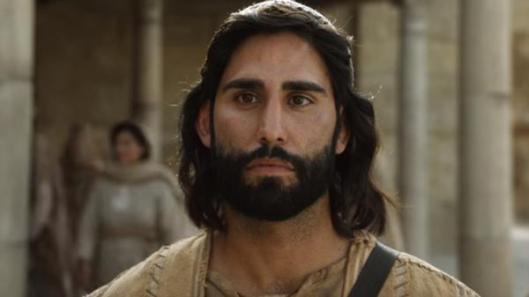
We don’t really know a lot about Joseph through the scriptures, but we can draw several conclusions based on what we do know. The one simple thing that stands out to me is the name “Joseph”. I don’t think anything, especially having to do with the life of Jesus Christ, is by chance. Joseph’s name was not by chance. This was the man who would raise a perfect son. He would be the fatherly example to the one who would be the perfect example.

Just for fun, lets check out all the other Josephs we know. The pattern we see will show us that the name Joseph is kind of a big deal. As we think, maybe it will be even more obvious how great a man he must have been simply because God gave him a name was destined to be so meaningful.

Joseph #1.

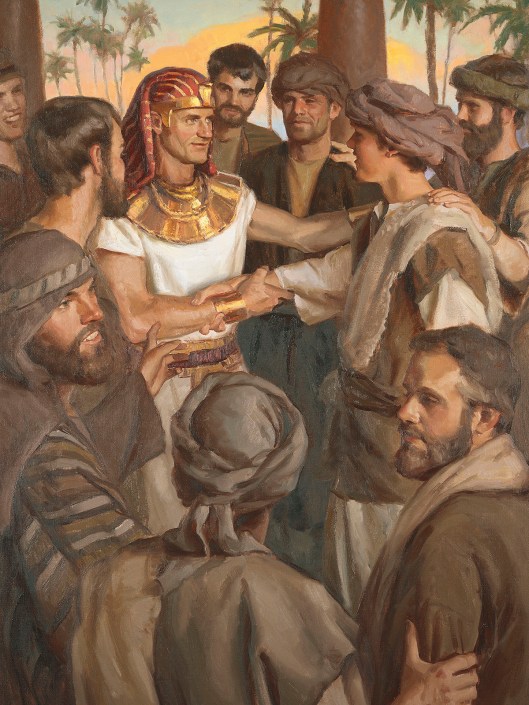
Joseph in Egypt

Joseph Greets his Brothers in Egypt

Probably the Joseph after which most other subsequent Josephs are named. Was one of the 12 sons of Jacob, or Israel. He was sold into Egypt by his own brothers as a slave and, as the story goes, won over the heart of the Pharaoh, received visions from God warning of the 7 years of plenty and of famine, and basically saved or brought salvation to Egypt, and in turn, his whole family, the covenant family of Israel, from certain death. A branch of this Joseph’s lineage also happened to be a group led by Lehi, and Nephi, who were the first authors of a book called the Book of Mormon. Not too shabby at all.

Joseph #2

CIS:SD.972

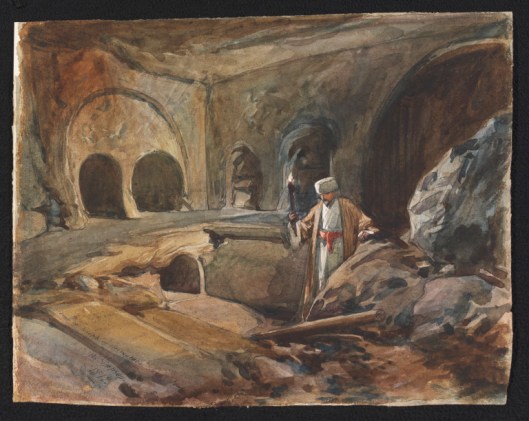
Joseph of Arimathea

Joseph of Arimathea. This Joseph is just briefly mentioned in scripture as well, but what a privilege he had. He provided the tomb for the Savior after he was crucified. He acted against his peers and almost all the contemporaries around him, and provided a safe place for the body of the Lord. It was from his tomb, that the Savior would emerge in his resurrected glorified form. It was from his tomb, that the gift of immortality for all men would be realized. It was from his tomb that the realization of eternal life could be possible! It was from his tomb, that salvation came in the form of the glorified resurrected Lord!

Joseph #3

Joseph Smith Sr.

Joseph Smith Sr.

Joseph Smith Sr. was responsible for raising the future prophet that would restore the complete gospel of Jesus Christ in the last dispensation. He instilled in his son, and his whole family, the values, and lessons that gave  a young 14 year old boy the understanding that he could go to a grove of trees and ask the questions that would eventually change the world. As an added bonus, he was also the first patriarch of the restored church.

Joseph #4

Joseph Smith Jr

Joseph Smith Jr.

One of the beneficiaries of the amazing Joseph Smith Sr. was his son, Joseph Smith Jr. This Joseph grew to be the great prophet of the restoration. He received more by way of revelation, and prophetic writings than any other prophet. Ever. He saw God the Father and Jesus Christ. Through this Joseph, the Gospel of Jesus Christ was restored, which provides the necessary ordinances that brings salvation to all men.

Joseph #5

jm_200_NT1.pd-P7.tiff

Joseph and Jesus

All of these Josephs are amazing, they make up an elite All-Time All-Joseph team. So, is it any wonder, that the final Joseph, the Joseph that raised Jesus, the humble carpenter, also carries that name?  Our Father in Heaven would not leave his son in the care of an ordinary man. He needed a humble, righteous, obedient, and loving man. He needed a man that would, quite literally, fill his own role in an earthly sense. He needed a man who would teach and raise the only begotten Son of God as if he were his own. He needed a man in whom he would entrust the Savior of the world. He needed a man, who would be humble enough to accept his calling, even though the boy he would raise, knew at a very early age, who his real Father was. Joseph was that man. So, even though we learn precious little about Joseph the man who raised Jesus, we can imagine that he may be one of the greatest men to ever walk on earth, because God the Father trusted him, and only him, to care for his little boy, the Savior of us all!
So, whats in a name? A lot. when we pause and think about the intricate symphony that our Father in Heaven is directing, it is evident. Every name has meaning, every note is where its meant to be, every moment, every place, every event is just as its meant to be. The name Joseph, by itself, is an honor. Lets think about that great man a little more this Christmas, and give him his place among the greatest Josephs of all time!

P.S. Other Josephs that that were also awesome but for this list earned “honorable mentions” include Joseph (brother of Nephi), Joseph Fielding Smith, Joseph F. Smith, and the apostles Joseph F. Merrill (1931), and Joseph B. Worthlin (1986). As a side note, it is interesting that since the restoration of the gospel in 1830, 3 of the 16 presidents of the church have been named Joseph.

Christ and Rudolph

rudolph_hero

If there was a Hall of Fame for Christmas Movies Rudolph the Red Nosed Reindeer would be a voted in on the first ballet via unanimous decision. It’s a classic. We’re all familiar with this story in this movie. However today for the first time it dawned on me how similar Rudolph is to Christ!

Yes, I realize what I just said and no I’m not crazy (well at least I tell myself that) so let me explain:

Rudolph is born different from the start. He enters the world different than his friends, his family, and all other of his species. It’s apparent early on that he is special. He has something no one else has… a red nose that can glow! You would think that the other reindeer would be like “dude, Rudolph that’s totally awesome!” and embrace it and him also, but they don’t. In fact, they don’t even accept him at all. Why not? Did they hate him because he was different? Were they secretly just super jealous of his illuminated nostrils? We may never know. Instead they laughed and called him names (like Pinocchio) and what’s worse, they never let poor Rudolph join in any Reindeer games (like Monopoly). They mistreated him, teased him, mocked and shunned him. He found refuge only in Clarice and his own parents. However, despite the small amount of supporters in comparison to the “haters” it wasn’t enough for Rudolph and ran away. Skipping ahead in the story after an awesome series of events Rudolph finds himself back at the North Pole.

It’s Christmas Eve and Santa is in a heap of trouble! Reindeer poop is about to hit the fan! It’s crunch time, it’s down the wire but “it’s one foggy Christmas Eve”! What are the Reindeer to do? Santa can’t see. The other Reindeer can’t see. There is no way out of this mess! Christmas for the entire world is in jeopardy. Every child on earth’s Christmas happiness hangs in the balance. Yes, it seems as though the fog and darkness will destroy all happiness and there is no way to cut through it. They needed someone’s saving grace, to save Christmas for not only them, but each and every person on earth! They needed a redeemer of sorts, but who? Bam! Remember Rudolph? You know, that other Reindeer? Santa did, and then came to say: “Rudolph with your nose so bright, won’t you guide my sleigh tonight?”

It’s key to notice Rudolph’s reaction. He had been mistreated, teased, tormented and slighted his whole life by these reindeer, but now, in the biggest of all situations he was needed by his tormentors. Yes, the same ones that never gave him the time of day. Yes, the same ones who relentlessly and adamantly opposed him. What was he to do? He could have dished up a piping hot plate of “karma” with a side of crow and offered them a nice warm glass of “shut the heck up” to wash it down with but he didn’t. Rather he busted out the greatest display of awesomeness those Reindeer had ever seen. He put on a clinic of forgiveness. He forgave all the other Reindeer on the spot and rushed to their aid! Christmas for not only the reindeer but for every person on earth was saved by him and through him. Then all the Reindeer loved him as they shouted out with glee “yippee, Rudolph the Red Nosed Reindeer you’ll go down in history” (like Columbus).

As you can see the similarities between the story of Rudolph and the life of Christ are actually pretty plentiful. In fact, they may even be approaching plagiarism on Rudolph’s part. Maybe it’s meant to be that way. Maybe the story of Rudolph is really the story of Christ in disguise? Maybe it’s a way we can all remember Christ that much more? Maybe when we sing and understand Rudolph’s story we’re really meant to sing about and understand Christ’s story. I don’t know if that’s the real intention, but what I do know is things were different with Christ from the start also.

From the prophesy of his birth, the star, the means of Mary conceiving, his entrance into the world in such humble circumstances and more it was clear he was different from the start. How ironic that the Savior of the world, the greatest of us all, was born in not in pomp and palace, but in a manger. Christ was welcomed to this world not surrounded not by precious stone, marble, and countless servants but rather with animals and hay. Ironic, but incredibly symbolic and telling of who he was, is and always will be.

Just as there is now, to all goodness and love there is opposition. In Christ’s case there was the despicable action taken in attempt to prevent Christ’s very birth. Man’s attempt to thwart God’s will failed. As Christ grew so did the number of followers and opposition he had. He was polarizing. Those who were pure in heart saw him for who and what he truly was, while the others clouded by the fog and darkness of jealousy and pride didn’t want to or even refused to see.

The world was ripe. They needed help whether they new it or not. They needed a Redeemer. We all did. However, just like the Reindeer did, they were mocking the one, THE ONLY ONE, who could, and had the ability to help them!

Christ was wrongfully accused and allowed himself to be taken to the cross. There, while on the cross mere moments after demonstrating the single greatest display of love, and forgiveness history has ever or will ever see, he then died to perform the single greatest act the world has ever or will ever know.

It’s mind boggling to understand even a small or simple portion of this. Personally, I don’t know if our minds are even capable of doing so. Even the tip of this iceberg is jaw dropping. To understand that in the very moment, in more pain than we could even imagine or withstand, while being tortured, ridiculed, spat upon, and tormented, Christ, while hanging from a cross he himself was forced to carry himself, with nails driven through his wrists and hands, while wearing a crown of thorns and bleeding forgave those who had done or even supported these actions in the very moment they had and were doing them. This goes beyond Job’s life, this goes beyond anything we can even comprehend! Then he died. Did he die for his supporters in the crowd? Yes… and of course also those who hated him, despised him, laughed, mocked  and jeered at him as they watched his mortal life slip away. He gave his life for EVERYONE. Words don’t exist that properly put that into perspective. It’s absolutely amazing.

Here’s where the story differs. With Rudolph, after his miraculous act, “all the Reindeer loved him”. With Christ it’s much different at the moment. Even though Christ has already performed the ultimate act if sacrifice for  each of us, and offered a means to be saved for everyone, and despite what we has done for us since then, and will continue to do for us… not all the “reindeer” love him! There are many who still hate, still scorn, still despise him. Yet he still remains patient, still hoping and pleading with those to take a gift that will make them happy beyond measure and provide endless joy and happiness that unfortunately still remains wrapped.

If your like me your wishing this story had a happy ending. Well, it does… because we’re not all the way through the story are we!

If you skip to the end of the story, to “the last page” you’ll read the promise: “EVERY KNEE WILL BOW, AND EVERY TONGUE CONFESS THAT JESUS IS THE CHRIST”! That, is a happy ending!

So this season, let’s take a minute to try to understand, so we can realize that not only this time of year, but every day that Christ is the gift. The perfect gift in every way. What more do we need? What more could we want? He is Christmas. He is life. He is the reason and the goal. His life, his death and the atonement is the gift we can use every single day, every moment of our day. He is joy, love, happiness, forgiveness, mercy, kindness, and understanding. He is everything we can ever or will ever need. He is not only what Christmas is all about, but rather what LIFE itself is about.

Merry CHRIST-mas


The Crumbling Walls of Stone

nevitsky-castle-zakarpattia-region-ukraine-1

No matter what is happening in our world, or even in our own neighborhoods, or communities, we can be safe. Its hard to believe sometimes given the nature of our enemies. Real safety isn’t a mortal achievement at all, but an eternal one. Once we realize that our lives don’t really start  when we are born, nor end when we die, we can see with the proper perspective to understand this.

Sometimes it seems like we are living in a modern day movie of history repeating itself. If that is so, lets look to what our ancient forefathers did to keep themselves safe, or what they didn’t do to bring on their demise.

In the scriptures, we learn that our modern difficulties will only increase, times will be harder, and evil will grow in scope, and power. We need to be able to recognize what is really happening all around us, and not repeat the same mistakes that so many throughout history have made- the mistake of forgetting God. We cannot forget who we are, why we are here, and in whom we must rely to find real safety, and real peace.


The Crumbling Walls of Stone

The walls of stone around us built by hands of mortal make,
have claimed to offer solace from dark storm, strong wind, and quake.

Protecting from our foes without, this shelter here inside,
constructed by the hands of those who fought, and bled, and died.

And for these many years have stood, sustained by God alone,
As men within these walls have knelt before our Maker’s throne.

But now, dark forces in and out, relentlessly conspire,
to weaken all these stones, by fear, and flame of dragon fire.

For not all men within now kneel before the strength and pow’r,
of Him whose hand would strengthen all in desperation’s hour.

Now as the walls around us fall, and enemies abound,
He still extends His call to us, His safety can be found,

And we can be untouched by flying shards of rending stone,
To walk in peace and safety- even though we walk alone,

And as our father Alma walked with pow’r from prison rent,
So can we, if we rely, on Him who Father sent.

These great walls, sustained by God, now stand all on their own,
Relying on the strength of men, and crumbling ancient stone.

Are we now ready, in our hearts, to face the world outside?
To kneel, to walk, and stand alone, and in the Lord confide?

Come feel His warming love, and light, that neither fades nor dims!
Petition his eternal peace that comes through faith in Him!

Though enemies deride, and tempests beat before our face,
Our souls can stand fulfilled, instilled, with everlasting grace!


Graduating from the Obliviousness of the Benchwarmer


bench

When I was a sophomore in high school, I was able to dress out, and sit on the end of the bench during the varsity basketball games. There were 4 or 5 of us. We loved it because we felt absolutely no pressure to win because we were just afterthoughts, or decorations really. We were basically cheerleaders in uniforms, as we were so far down the bench we could barely see the coaches at the other end.

On occasion, however, when we (the varsity team) were up big, we would get our chance to play in garbage time. We would get in and play our hearts out for our shot at getting our name in the paper by scoring a point. That was the ultimate goal, in our 15 year old minds, to become famous by getting our name in print.  Of course, we also had a great time inventing the now infamous celebratory dance that we named “the chicken”. The game itself meant nothing to us really, because we weren’t seniors, and it wasn’t really even our team. We just thought about how awesome we could dance, and hoped we could get some playing time, maybe. We looked a lot like these guys..Who are hilarious by the way…

Although we had a great time, and made fools of ourselves dancing, the thing we didn’t understand really until later, was that the games actually meant something. Not that what we were doing was anything bad, but we kind of missed the opportunity to be more of a part of the real game that was going on. We were a little oblivious to the reality of what was at stake. We were a bit blinded by whatever-ness, or lack of perspective. We were content in our little party space at the end of the bench, while the real game was happening all around us.

Today, I feel, many of us are still living our lives like we are the benchwarmers. We are content in our little corners of our lives and sometimes fail to see the importance and gravity of the game that is going on all around us. We are in a game for our lives. The outcome determines our  place in the eternities. And sometimes we are only concerned if we can get mentioned in the paper the next morning.

If we take a step back, and look at the test we are in we can think…who are the players? Who are we playing against? Do we even realize we are living right in the middle of the final minutes of the most important game ever?

So how does this look in real life? Over the last few months, there have been an increase in dramatic events that have changed the way many people feel about their lives. With terrorist attacks in Paris, and now in San Bernadino right here at home, it has created an increased level of anxiety and fear. People are grasping at anything, everything, and anybody who claims to offer safety and security. Safety and relative peace cannot be guaranteed, and seem unattainable even impossible. But, we need to remember… what game we are playing?

Are we playing the “whoever dies with the most stuff wins” game? Or,  the “whoever gets their name in the paper the most wins” game? Or, the “whoever can dance the most awesome chicken at the end of the bench” game? If so, we will look for peace and safety in the wrong places. We will fall prey to the illusion of secular security, which is nothing more than false security.

When we look at our lives differently, the way we should see them, everything changes. We then begin to realize that the real game is between good and evil and we are here to choose for ourselves which team we want to be on, and then become key players on the team. The only way to win, and achieve true safety and real peace is to align ourselves as close as possible to the One who will ultimately win the game. He is the author of the peace we seek, the Prince of Peace.

Jesus Christ is the only way to find peace. He alone provides the real lasting safety that we all seek, because that is the whole point of this game of life we are all playing. In this game, the elusive sentiment of true happiness is only awarded when we completely and fully disregard the world’s mirage of secular security. When we stop concentrating only on how awesome our chicken dance is, and actually start playing to win.

It is then we will realize that we are involved in a game on a much larger playing field than we ever thought, and we aren’t just hoping for the few minutes of playing time awarded to the scrubs in garbage time, our minds and hearts can be more committed to the pursuit of real and lasting peace, love, security and divine safety that comes only through the Savior of the world.

Joseph Smith wrote about the way the game will end, and its perfect to read when we feel overwhelmed with all the negative or when the evil in the world seems overwhelming, and the game seems to be lost. Just remember, we choose which team we want to be on!

He wrote, “the Standard of Truth has been erected; no unhallowed hand can stop the work from progressing; persecutions may rage, mobs may combine, armies may assemble, calumny may defame, but the truth of God will go forth boldly, nobly, and independent, till it has penetrated every continent, visited every clime, swept every country, and sounded in every ear, till the purposes of God shall be accomplished and the Great Jehovah shall say the work is done” (History of the Church, 4:540).

Real peace and safety can come to us. But, it comes when we look to Christ. He pours it upon us when we try to be like Him, and follow Him. He has invited all of us to do so, and find the peace and safety only He provides.

“I will both lay me down in peace, and sleep: for thou, Lord, only makest me dwell in safety.” (Psalms 4:8)

“Fear thou not; for I am with thee: be not dismayed; for I am thy God: I will strengthen thee; yea, I will help thee; yea, I will uphold thee with the right hand of my righteousness.” (Isaiah 41:10)

“Therefore, fear not, little flock; do good; let earth and hell combine against you, for if ye are built upon my rock, they cannot prevail.” (D&C 6:34)

The Overwhelming Importance of Tee Ball

giphy

One of the most difficult tasks in all of sports is to hit a good curveball. It comes at you traveling sometimes up to 90 miles an hour, from only about 60 feet away. You have only a split second to recognize the velocity and direction, make a decision on whether to swing or not, and then adjust your hands, wrists, arms, legs, and head to make contact with the ball. It takes years and years and hours and hours of practice to be able to do it with even a little bit of consistency. But for the most part, we would all look foolish standing in the batter’s box facing the worlds best pitchers and their wicked curveballs. The professional hitters often do.

So what would it take to get to where we could hit that curveball? It would take the same amount of time, effort, practice and experience that the best hitters in the world put in. But even they started with the basics. Tee Ball.

When kids start playing baseball, they’re usually tiny, and are just as interested in the butterfly’s floating in the outfield as they are with the bat and ball. But hitting is taught with the ball sitting stationary, on a tee, ready to be hit. Its simple, easy, and the perfect way to practice your swing.

As the years go by, and you become more experienced, hitting becomes more advanced and difficult, the coach pitches to you, then the other kids. Eventually those kids get older, better, grow muscles, and a mean streak, and pretty soon, instead of that friendly floating ball thats easy to hit, its a hurled projectile that may or may not have any control on it. sometimes its within the strike zone, and sometimes you duck to save your face.

After a while, the simple straight fast ball isn’t the only thing coming your way, its mixed with an off speed slower one, a curving bender, a sliding knee buckler, or the knuckleball that dances just like the butterflies from tee ball.

But with time, experience, practice and some luck, you can still hit them. Even the best pitches can be hit. Even though at times it seems nearly impossible. But one thing is for sure, if you haven’t practiced, or seen them before, your chances are slim. You may even have a slight heart attack simply watching the pitch scream towards you.

The same concept is playing out today in our society. Especially in a spiritual sense. Our opposition in society is throwing curveballs, sliders, knuckleballs, and a nasty heater almost every pitch. But it seems like not all of us have put in the time, and practice to have a reasonable shot at fending off those pitches and being successful at the plate.

We need to go back to basics. back to Tee Ball.

When we were little, in primary, we all learned the how to do what our Heavenly Father asks of us. Choose the right, follow the prophet, love one another, and love God. We learned who we were, and what our purpose on earth is. The gospel was taught in a simple way that was simple to understand. It was tee ball.

As we grow older, life seemingly gets a little more complicated. But the basics are still the same, just like keeping our eyes on the ball, taking a smooth step, and having a level swing. We still need to love God, love our neighbor, choose the right, follow the council of the prophets, and recognize who we are, and why we are here.

The game changes as we grow older spiritually as well. Just as in baseball,  the opposition gets better, grows muscles, and a nasty streak. He tries to cheat, and fool us by throwing different pitches. He tries to deceive us. And he has a nasty curve.

So how do we hit his curve, his split finger, or his dancing knuckleball? We have to start with the basics.

We need to follow the formula for success, and practice and practice, and practice. We do this by being close to the Lord, His spirit, and follow and live His teachings. As we do so, we become familiar with it, and recognize when He is influencing us, when He is speaking through His prophets, and most importantly, we begin to recognize the curveball. We see it coming, we are prepared for it, and we can hit it.

The basic fundamentals of the gospel are as simple as keeping our eyes on the ball. Its being in the scriptures, praying, and genuinely wanting to be like our Savior. If we do that, we will be ready for the curve, because we will see and recognize it.

And the curves are coming. Today, a lot of people, even within the gospel, are having a hard time with some of the curveballs coming from the opposition. The society norms are being passed off as good, and touted as progress, but in reality are in direct opposition to the gospel truths taught by the Lord and His prophets. The best curveballs look just like a fastball until the last second when the bottom falls out, but then, its too late, because we’ve already started to swing.

If we start young or old, it doesn’t matter, we need to keep our eyes on the ball, and practice, practice, practice. If we do, and listen to, and follow the advise, council, and teachings of the living prophets and apostles (best 15 coaches you could ask for), we will be prepared for, and recognize the curves when then come. It is the 9th inning after all, and the game is coming to an end, and we need to really decide….whose team are we on?

chipper-jonescolor

The Divine Duality of Adversity

fullwidth.59cefd6d

Sports can teach us almost anything. Growing up, I played baseball, basketball, football, golf, pickle ball, wiffle ball, and, everyone’s favorite 5th grade sport, butt ball. Each one of these sports taught me about how to work hard, practice, work as a team, and all of those happy feel good things that are common to sport analogies. But, it also taught me about the reality of loss, pain, sorrow, discouragement, and disappointment.

In today’s society, there seems to be a growing trend to try and shelter our kids from these realities. We give out trophies to all who participate, no one gets thrown out at first, no one loses, and no one wins. We do this to make sure that we don’t hurt anyone’s feelings. The problem with this thinking, is that it can create a false bubble of reality where nothing but contrived happiness and joy exists and never teaches the lessons of how to process the reality of losing, or the unavoidable disappointment that life will bring.

When we do this, we find ourselves just like the inside of Riley’s head in the movie, Inside Out, where “Joy” the happy emotion, tries to completely eliminate “Sadness” from ever having any kind of control over Riley’s emotions, she tries to protect Riley from ever feeling anything but joy. A great idea right? But, in the end, Joy realizes that sadness is not only acceptable, but an essential necessity to feel the complete fullness of joy. The contrast, or recovery from sadness, is what highlights true happiness in its fullness.

Some of us go through challenges that are nothing short of devastating. For some, the disappointment or sorrow hits hard as in when a child passes away. For others its watching a son or daughter lose their way. Some circumstances seem almost unbearable, with no hope for any good to come of them. What do we do then? How do we deal with devastation? We need help. We cannot do it alone. That is the whole point of passing through disappointment, and sorrow, or pain and suffering. We are supposed to learn from them.

These scenarios have played out since the beginning of time, and they will continue. Lets just look at a few examples of adversity and painful things happening, even to good and righteous people…

o-ye-fair-ones

Mormon was the prophet and military leader that knowingly watched as his entire people ignored his inspired pleas for repentance, and openly chose wickedness. These were his people, the very ones for which he was responsible. His teaching fell upon deaf and rebellious ears, and 230,000 of his men, the Nephites, were slaughtered in a single battle. They were completely wiped out by the Lamanites, because they chose wickedness. We can only imagine the disappointment and sorrow he felt. He wrote, “O ye fair ones, how could ye have departed from the ways of the Lord!..how could ye have rejected that Jesus who stood with open arms to receive you! How is it that ye could have fallen! But, Behold ye are gone, and my sorrows cannot bring your return.” (Mormon 6:16-19)

IMG_5907

Moroni, Mormon’s son, also witnessed this last great battle as a captain over 10,000 men. He then watched as the Lamanites killed his father, and turned after him. He then spent the remaining years of his life completely alone, running for his life.

IMG_5897

Ether, a Jaradite prophet, just like Mormon and Moroni, witnessed the entire wicked self destruction of his people when they refused to listen to his pleadings for their repentance. The great final battle claimed the lives of over 2 million men women and children. They not only rejected his teachings, but tried to kill him for doing so.

There are countless examples of devastating disappointments and sorrows. How did they deal with them? How did they continue to go forward while it seemed everything in the world was against them, even though they were doing what was right?

Think of it this way, what positives came of the examples of Mormon, Moroni, and Ether? What can we learn from them? Mormon, and Moroni both penned some of the most powerful chapters in the Book of Mormon, probably at the same time they were dealing with the destruction of their people. Moroni’s promise, that has led to the spiritual conversion of countless people, was written while completely alone, wandering in the wilderness. One of the best chapters in scripture on the principle of faith was written by the prophet Ether as he watched his people completely self destruct. Sometimes bad things do happen to good or great people, but sometimes great things come from it.

Part of life is understanding that we will have problems, that we will lose, we will be dealt a crap sandwich once in a while. But, what do we do with that crap sandwich? Do we bury our head in the sand and give up? Or, do we try to deal with it like the best chef’s on Chopped, and add bacon, chipotle peppers, and transform that crap sandwich into a chorizo preschutto, drizzled with a poblano pepper aoli?

The Lord told Joseph Smith while he was illegally imprisoned in the Liberty Jail, “that all these things shall give thee experience, and shall be for thy good.” (D&C 122:7)

The Lord also taught this when his disciples were feeling abandoned, lonely, helpless, and overwhelmed (and he will say the same to all of us), “I will not leave you comfortless, I will come unto you” (John 14:18) “Come unto me all ye that labor, and are heavy laden, and I will give you rest. Take my yolk upon you, and learn of me;…. and ye shall find rest unto your souls.” (Matt 11:28,29)

When we turn to the Lord, our Elder Brother, He comforts us, He succors us, He changes us. As hard as it is, we need to try and see our lives as our Father in Heaven does. We need to try and see our disappointments and sorrows as opportunities to allow Jesus Christ to be the one who stands by our side to lift us up.

The ultimate lesson from our Father in Heaven is this, He wants us to grow, experience a full life. We really gain the experience He wants us to have when we pass through disappointment, and then use the gift of the Atonement of His Son to help us through the hard times. So, even though the sorrow is real, and the disappointment unbearably hard and devastating at times, these times are, in reality, opportunities to better know His Son. This is the divine duality of adversity. They are opportunities to open ourselves to the fullness of His Comforter. The contrast we then feel becomes the knowledge and experience our Father in Heaven needs us to understand. And maybe our experiences will benefit us in the future, or may benefit others who can learn from us.

Where can I turn for peace?
Where is my solace
When other sources cease to make me whole?
When with a wounded heart, anger, or malice,
I draw myself apart,
Searching my soul?

Where, when my aching grows,
Where, when I languish,
Where, in my need to know, where can I run?
Where is the quiet hand to calm my anguish,
Who, who can understand?
He, only One.

He answers privately,
Reaches my reaching
In my Gethsemane, Savior and Friend.
Gentle the peace here finds for my beseeching.
Constant he is and kind,
Love without end.

Hymn 129 Where can I turn for Peace?