• About us
  • The Church of Jesus Christ
  • The Family
  • The Living Christ

4 Brothers Blog

4 Brothers Blog

Category Archives: General

Treasure In Earthen Vessels

20 Sunday Sep 2015

Posted by Colby Alexander in General, Holy Ghost, Jesus Christ, Light, Love, Motivation, Opposition, Poems, Strength, Trials, Weakness

≈ Leave a comment

jarsofclay

Sometimes we don’t see our own worth in the eyes of God. We are his children, and he knows and loves each one of us perfectly. We mean everything to Him. He knows us, our problems, our fears, our apprehensions, our insecurities, our weaknesses, our doubts, our reservations, everything. He knows how we feel, how we think, how we are afraid to open up to our problems, and admit them even to ourselves. He knows! And He understands. And yet, He still loves us unconditionally! Sometimes, we need to remind ourselves of our true worth in His eyes, not our own, or anyone else’s. Just His.

For our Sunday School lesson this week, part of the scripture reading was in 2 Corinthians Chapter 4. As I was skimming through those verses, I read this which beautifully explained this principle to me. This is Paul speaking…

6 For God, who commanded the light to shine out of darkness, hath shined in our hearts, to give the light of the knowledge of the glory of God in the face of Jesus Christ.
7 But we have this treasure in earthen vessels, that the excellency of the power may be of God, and not of us.
8 We are troubled on every side, yet not distressed; we are perplexed, but not in despair;
9 Persecuted, but not forsaken; cast down, but not destroyed;

I loved these words of encouragement. Paul and all the Saints and apostles and disciples were being persecuted for what they believed. But, in their sadness, pain, and worry, they had solace in Jesus Christ and in the comfort that He gives. The closer to the Comforter we get, the greater our resilience to pain, and suffering becomes, and the closer we get to our Savior.

Lets all look at our difficult times as opportunities to become closer to the Comforter, and to Jesus Christ who sends Him to us.

A Humble Prayer

My God! Through vessel weak and frail,
Wherein thy treasure hides,
I beg thy light, through darkened veil,
reveal my worth inside,

And when dark hours with me abide,
And I, alone, can’t see
help me perceive thy treasure’s light,
Thou hiddest deep in me!

Share this:

  • Tweet
  • Email a link to a friend (Opens in new window) Email
  • Print (Opens in new window) Print
  • Share on Tumblr
  • Share on Reddit (Opens in new window) Reddit
Like Loading...

Foolish Imaginations

12 Saturday Sep 2015

Posted by Tyson Alexander in General

≈ 1 Comment

Boat 2

Because Nephi is awesome (all around full fledged awesome) – and because he teaches us such amazing lessons in his writings – I am going to write (again) about some of the things he teaches us.  But in this particular case (this blog post) I am also going to thank his older and murmur-ier brothers for providing Nephi (and us, since Nephi recorded it for us) with excellent insight into “things as they really are”.

In 1 Ne. 17:8 the Lord tells Nephi “thou shalt construct a ship”, for the express purpose of taking his entire family (his parents, the whole family of Ishmael, his other siblings and their spouses and children, Zoram and his family, and his own wife and children) across the Sea Irreantum (a.k.a. “many waters” a.k.a “the ocean”).   He’d never done that before, and in all reality, building a giant boat to cross the ocean was pretty much crazy.  Not crazy in a cuckoo or mental sort of way, but crazy in a “that is a crazy huge task” sort of way.

Nevertheless, Nephi gets started on this task right away (without a complaint).  He starts by making a fire, and then finding ore so that he can then melt that ore out of the rock so that he can make tools – all before he even starts on the lumber or the actual boat.  Did I mention this was a crazy huge task? And sometimes we complain about our home teaching assignment…

At this point – while Nephi is laying the groundwork, and “preparing every needful thing” for this crazy task, he asks his older brothers for some help – or as Nephi terms it “labor”.  They, in true form, “did complain against [Nephi] and were desirous that they might not labor.”  I could very well side with Laman and Lemuel on this one, since I don’t know that I would necessarily enjoy “laboring” to build a boat either, but I don’t think that was the reason for their complaining.  Nephi records that the reason they wanted to withhold their labor was because “they did not believe that he could build a ship, neither would they believe that he was instructed of the Lord” to do so.  They didn’t want to help Nephi because they thought he was completely nuts.  They’d already been dragged for 8 years through the wilderness and were tired of all this “journeying”.  They were completely fine with the idea of staying on the beach where there was plenty of food and comfortable lounging.

This answer (no) makes Nephi “exceedingly sorrowful” It is important to note that he is not saddened because they don’t want to help, but because of the reasons why they don’t want to help.  He is sorrowful because they don’t see the vision and feel the motivation and want to be obedient to the Lord and have the spirit guide them; not because he ever doubted his own ability or confidence in actually building a boat (even if he would have had to do it mostly on his own).

When Laman and Lemuel “saw that [Nephi] began to be sorrowful they were glad in their hearts, (obviously not understanding the real source of his sadness) insomuch that they did rejoice over [him] saying: ‘We knew that ye could not construct a ship, for we knew that ye were lacking in judgment, wherefore, thou canst not accomplish so great a work.’”

Nephi recorded that solid gold for us as his readers.  Laman and Lemuel are more than happy to tell Nephi what he can’t do and how foolish he is for ever thinking that he could “accomplish so great a work.”  How’s that for supportive brothers?1

Let’s pause here to recognize why that comment (thou canst not accomplish so great a work) is false.  It is false because it is not true (write that one down).  This is one of the tools of the adversary and is often repeated by those who comfortable lounging on the beach while commenting to each other about how foolish other people are.  They make these statements because he [they] don’t like it when somebody tells them they should start helping with the boat construction so that they can sail towards the promised land (code for living the right way or honestly trying to – even if it means undertaking monster changes in their lives) or when they just see you working on a great task without even asking them for help.  I bet just watching  Nephi get up early every day, study and pray and work hard to map out and plan to build the Titanic probably made them feel feel uncomfortable in their shade tent (this may have even been helped by others in the party who were more than willing to help).  People working hard to accomplish great things makes them feel bad, it makes them feel angry and perhaps even a bit guilty.  So, they start to tell other people (and anyone else that will listen) that they can’t do such great things or that they are foolish for even trying.

So, naturally, Laman and Lemuel go to the all to familiar “you are crazy” insults.  They declare: “thou art like our father (and the other silly prophets), led away by the foolish imaginations of his heart”…Behold, these many years (8) we have suffered in the wilderness, which time we might have enjoyed our possessions and the land of our inheritance; yea, and we might have been happy.”  They (and others like them) are perfectly happy in their comfort zone and not building boats or accomplishing great works.   

So, on the one hand we have Laman and Lemuel (code for the adversary) telling us that we “canst not accomplish so great a work” and on the other hand we have the Lord commanding us to do so – and to do that great task as perfectly as we possibly can (remember when he told us be charitable and kind and everything else, and as if it weren’t enough he then he also said “be ye therefore perfect”)?  He also tells us that we can “do all things through Christ which strenghteneth [us]” (Philippians 4:13).  I’m pretty sure the word ‘all’ includes big, great, and even crazy huge.

One side says you can’t, the other side says you can.

The bad guys claim that we are led about by the “foolish imaginations” of our hearts.  But, I think we can remember that “the foolishness of God is wiser than men” (1 Cor. 1:24), and that “God hath chosen the foolish things of the world to confound the wise” (1 Cor. 1:27) and take their claims of our great “foolishness” as a tender compliment and say “guilty as charged”, and oh my how my heart burns for that foolishness.  So thank you Laman and Lemuel for recognizing my weakness and foolishness in your eyes, it proves that I am on the right path.

Notes

1 I wish I could say that I’ve never acted like this with my brothers, but I have so I can’t.   I have been all to eager to tell my brother what he could not (or should not) do.

Share this:

  • Tweet
  • Email a link to a friend (Opens in new window) Email
  • Print (Opens in new window) Print
  • Share on Tumblr
  • Share on Reddit (Opens in new window) Reddit
Like Loading...

A Light to End All Darkness

06 Sunday Sep 2015

Posted by Colby Alexander in Faith, General, Joseph Smith, Poems

≈ 1 Comment

jsfv

In this post, I think I should explain why it is that I write a lot of my thoughts down in poems. I never really thought I would ever do that, its just something that kind of happened. But, to me, poetry has an ability to enhance the visualization of the words on the page, or a way to better describe what it is I am trying to say. It elevates the sentiment. Im not saying that I am the next Edgar Allen Poe, or anyone special, but I do enjoy thinking, and visualizing these thoughts into verses that do those thoughts more justice than they would otherwise receive. Poetic words, in a way, almost paint a picture in my mind. I think that poetry or lyrics compromise at least half of the power of music. Take away the sounds of good music, and with just words, the power remains.

Parley P. Pratt (author of several hymns) wrote of a time when he was jailed together with Joseph in the Richmond Jail. Parley described their jailers as men “of the most noisy, foul-mouthed, vulgar, disgraceful rabble that ever defiled the earth”. He describes the event like this…

“In one of those tedious nights we had lain as if in sleep till the hour of midnight had passed, and our ears and hearts bad been pained, while we had listened for hours to the obscene jests, the horrid oaths, the dreadful blasphemies and filthy language of our guards, Colonel Price at their head, as they recounted to each other their deeds of rapine, murder, robbery, etc., which they had committed among the “Mormons” while at Far West and vicinity. They even boasted of defiling by force wives, daughters and virgins, and of shooting or dashing out the brains of men, women and children.
I had listened till I became so disgusted, shocked, horrified, and so filled with the spirit of indignant justice that I could scarcely refrain from rising upon my feet and rebuking the guards; but had said nothing to Joseph, or any one else, although I lay next to him and knew he was awake. On a sudden he arose to his feet, and spoke in a voice of thunder, or as the roaring lion, uttering, as near as I can recollect, the following words:

SILENCE, ye fiends of the infernal pit. In the name of Jesus Christ I rebuke you, and command you to be still; I will not live another minute and hear such language. Cease such talk, or you or I die THIS INSTANT!

He ceased to speak. He stood erect in terrible majesty. Chained, and without a weapon; calm, unruffled and dignified as an angel, he looked upon the quailing guards, whose weapons were lowered or dropped to the ground; whose knees smote together, and who, shrinking into a corner, or crouching at his feet, begged his pardon, and remained quiet till a change of guards.

I have seen the ministers of justice, clothed in magisterial robes, and criminals arraigned before them, while life was suspended on a breath, in the Courts of England; I have witnessed a Congress in solemn session to give laws to nations; I have tried to conceive of kings, of royal courts, of thrones and crowns; and of emperors assembled to decide the fate of kingdoms; but dignity and majesty have I seen but once, as it stood in chains, at midnight, in a dungeon in an obscure village of Missouri.

I love the picture in my head that comes as Parley describes the dignity of Joseph Smith.

Words can be so much more than just words. They can move us to feelings of loyalty, honor, indignation, courage, love, or reverence. Even better when those words describe something amazing.

To me, one of the most important events in the history of the world is the story of Joseph Smith and the first vision. It contains an immense inherent power that I feel each and every time I hear it, present it, think about it, or hear songs about it. It happened. There is no question.

So, I have written a few words to try and express my testimony of this event and of this man. I want my testimony to be public, on the record, etched in stone, so that there is no doubt as to where I stand. I want my kids to be able to look back at these words when I am gone, and draw strength from them. I look forward to the day that I can stand shoulder to shoulder with Joseph Smith, embrace him, and thank him for his immense personal sacrifice so that I, with my family, could enjoy the fullness of the blessings of God. I love him. I honor him, and I will praise him forever. God bless Brother Joseph.


A Light to End all Darkness

A blinding mist obscured the light that shone above the clouds,
While God withheld His lightning strike that soon would split the shroud-
A blanket o’er the world of man, no light therein allowed-
To see God’s purity and truth through apostatic cloud.

False men with lightless eyes proclaimed to own inspired sight,
while boasting truth within them lay interpretations right,
and damning those not joined with them to suffer hellish plight,
The snake had hissed his blinding mist that shaded God’s pure light.

But stifling darkness o’er the land could not disrupt the Mighty’s hand,
Inspired by whisp’ring spirit voice, a boy, obscure, was meant to stand.
The hosts of angels in the clouds of Heav’n knew the plan.
For God himself would bring the truth- restore to lightless land!

A darkened path seemed naught to be the will of loving God,
Whose prophets taught to follow him- to tread as He had trod,
While preaching mouths did honor Him, inside- their hearts lay flawed,
For bitterness and strife there dwelt, not fertile gospel sod.

This humble boy, confused by all the animosity,
Then read a verse in bible text, that promised he could see,
E’en for himself the truth unknown, if asked in faithful plea,
So on his knees, petition sent, in sacred grove of trees.

And as his mouth to heaven sent that soft and secret prayer,
The serpent came in power to arrest and bind him there,
With deepest black of darkest night, with fear beyond compare,
It overcame that humble boy now filled with deep despair.

His tongue was bound by serpent chains, and could not force a sound,
The overwhelming darkness held him prisoner on the ground
His soul, now on the precipice, black emptiness around,
Almost succumbed to evil’s grip, and helplessness profound.

But, in that very moment of his ultimate despair,
A light of magnitude n’er seen, descended from the air,
And settled on his feeble form, dispersed like lightning’s flare,
A brilliant beam of Heaven’s love and light beyond compare!

All black dispersed, with shrieking wail, in deferential flight,
as every creviced inch of earth was bathed in brilliant white!
And gone were feelings borne of him who’s mist obscured clear sight,
Replaced with overwhelming love- midday replaced the night!

All life then bowed before Creator of the Earth and skies!
Descending in pure majesty- The Father at his side!
The God of all the Universe! Perfected! Glorified!
Restoring revelation’s pow’r, the veil cleared from men’s eyes!

That young and humble, faithful boy, with trembling, shaking hands,
Had just beheld majestic glory of the Son of Man!
And now would rise as Prophet to restore the gospel plan,
To share! Declare! that truth returned to promised cov’nant lands!

The prophet Joseph then subjected to the serpent’s ire,
Would feel the whip, and feathered tar as wicked men conspired,
To snuff the light within him lit, and douse the gospel fire
With violent rage of blinded men, now minions of the liar!

Refined through lonely hours in prison, cold and suffering,
Illegalities unchecked, compounded winter’s sting,
His prayers sent up in sorrow’s bane did heav’nly comfort bring,
As Joseph’s faith through wind and fire became his offering.

Then willingly, to Carthage, midst the snarling mob of hell,
Who’s violent hate, and lawlessness had prov’n intent to quell,
The tidal wave of light o’reflowing from prophetic well,
That fed the flood that o’er the thirsting earth began to swell!

Now musket ball would end the hallowed life of that great man,
Fired from the coward’s rifle, by corrupted evil hands,
His brother Hyrum’s martyred blood would also stain that land,
And cry aloud for vengeance, while their testimonies stand!

This light to end all darkness, true revelations power,
was saved to come to Earth through him in designated hour,
And serve as beacon, to us all- all darkness to devour,
This light to end all darkness, meant to feed the gospel flower.

This mighty man, the prophet dear, My Prophet still, he stands!
and mingles with the Gods above, yet still, for me, he plans,
And I shall know and see his face, embrace, and clasp his hands!
And I shall honor and revere- SHOUT praise to that great man!

72145a65cc0af6bf068b36eba67ffae6

Share this:

  • Tweet
  • Email a link to a friend (Opens in new window) Email
  • Print (Opens in new window) Print
  • Share on Tumblr
  • Share on Reddit (Opens in new window) Reddit
Like Loading...

One Topic to Rule Them All

03 Thursday Sep 2015

Posted by Riley Alexander in General

≈ 1 Comment

Unico_Anello

Recently I was asked to speak in Church. My desire was to not only inspire my ward members, but to pull a King Benjamin and deliver a talk so awesome, so mind blowing, that everyone within earshot would became permanently and more deeply converted to the Gospel of Jesus Christ on the spot… oh, and that our entire ward would be translated as well.

So, with that totally obtainable and reasonable expectation in mind I set out to find the perfect topic. To achieve a ward translation I figured I likely needed a single topic that could somehow also cover every topic of the Gospel at the same time. This meant my single topic had to cover reading the scriptures, Temple attendance, magnifying your calling, having meaningful prayer, keeping the Sabbath day holy, paying tithing, home teaching, and basically every other aspect of the Church all at once. At this point I’m feeling super good and confident about the goals I had set for myself. I somehow needed “One topic to rule them all”. The problem was that single topic that covered all topics didn’t exist. Or so I thought…

Later that night I went to a meeting where Sabbath Day observance was discussed. A comment was made that we needed to have a “Zion Stake”. The comment then continued: to achieve that we would have to have Zion Wards. In order to achieve Zion Wards, we had to become Zion Families. To become a Zion family we have to become Zion individuals. Boom! That comment was the answer to my prayers and my talk began to form in my head! I had my topic! Not only that, I realized there is in fact “One Topic to rule them all!” It was Conversion! Deep, personal, and true conversion! This means knowing and understanding that this Church is true and that God lives.

It makes perfect sense because when we are TRULY converted we will NATURALLY find ourselves reading our scriptures, having meaningful prayer, paying tithing, home teaching, and doing all those good things! When I say converted though, I don’t mean converting like Heat “fans” when Lebron came to town only to abandon the team the second he left… I mean converting like Cubs fans, who deep in their heart know they are never again going to win a World Series, yet still buy season tickets, still paint their face, still cheer for their favorite players, and still hold out hope for the impossible. In this article though, the conversion I’m talking about is deeply rooting yourself and immersing yourself in the Gospel of Jesus Christ. This conversion when true, can and will change your life. It will change who you are, how you view yourself and others. It will change how you speak, how you act, and change the way you look at life. This deep conversion spans beyond this life and into eternity.

Awesome! So…  How to we become converted? This is what I love about this Church and what I love about this Gospel. There is not a single person in the Church that doesn’t know the answers to this question. It’s simple, it’s the Primary answers! Go to Church, read the scriptures, pray consistently, attend the Temple, ect… I love it because it’s not too difficult or hard to understand for anyone! It applies to every single one of us regardless of where we are in our Spiritual progression. This works every time without fail right? Yes… under one condition, I’ll explain…

James 1:5 and 3 Nephi 27:29 have something amazing in common: the word “ask”. This means you have ask for it. You have to want it. Sometimes “asking” requires you to ask really really hard, and often, before you receive an answer. If you don’t receive your confirmation right away it’s not because God doesn’t hear you, or that he doesn’t exist, it’s because you have to prove that you want it. You have to show him that you want it. Maybe you need to want it more or ask even harder. Remember that scripture that says “be ye slothful and not diligent, ask me not, and I will pour my Spirit upon you”? Me neither because it doesn’t exist! Asking for it, and wanting it will likely mean we have to take things to the next level.

What that means is not just doing it to do it, or just doing it to cross it off a list. We have to want it in our hearts, and with all our hearts! Going through the motions with empty intention doesn’t bring conversion anymore than buying a weight bench gets you ripped… I know, because I’ve totally tried that and it doesn’t work. There is an incredible amount of difference between “Praying” and “communicating with our Father in Heaven in deep and meaningful prayer”. There is a mammoth different between “reading the Scriptures” and “feasting up on the words of Christ and praying for understanding”. The same goes for “Fasting” and “going without food”, “home teaching” and “developing a relationship with your families” so on and so forth. What I’m saying is it’s possible to live the Gospel without the Gospel living within us. Whether we have never committed ourselves before or whether we simply need to recommit ourselves the starting point is the same. It begins with each of us. I promise you a deeper commitment to this Gospel will change your life, and for the better. I know because I’ve put those scriptures to the test, and again I promise you they work. I have seen and felt that first hand. Add this, my invitation to the countless others who have invited others to do the same. Happiness awaits.

Share this:

  • Tweet
  • Email a link to a friend (Opens in new window) Email
  • Print (Opens in new window) Print
  • Share on Tumblr
  • Share on Reddit (Opens in new window) Reddit
Like Loading...

Spiritual Adamantium

02 Wednesday Sep 2015

Posted by Tyson Alexander in General

≈ 2 Comments

original_513551_m3r0jnaa5b7agrcow6qgmgekn

I watched a video this week in which the speaker (Elder Kim B. Clark) quoted Ephesians 6:12. It was awesome (both the video and the scripture).  In fact, that one scripture might be one of the most motivating scriptures that we have – because it sizes up our opponents without any degree of dilution.  It lets us know exactly who and what we are fighting against.  It says that “we wrestle not against flesh and blood, but against principalities, against powers, against the rulers of the darkness of this world, against spiritual wickedness in high places.”

Elder Clark related this scripture in order to emphasize the use of the word “whole” in verses 11 and 13 – as it refers to the “armour of God” – meaning that we can’t just put on some of the armour, or even most of the armour – we need it all.  This is true. He also emphasized that no matter how awesome we are doing right now, it’s still not enough and we can still do better.

After the video, I read the whole passage – a bit slower than usual.  Please note that I have referenced this exact passage (Eph. 6:10-17) in a previous blog post but had not even noticed a key phrase until this last reading.

I started at verse 10 and read through verse 17:

10 Be strong in the Lord, and in the power of his might.

11 Put on the whole armour of God, that ye may be able to stand against the wiles of the devil.

12 For we wrestle not against flesh and blood, but against principalities, against powers, against the rulers of the darkness of this world, against spiritual wickedness in high places.

13 Wherefore take unto you the whole armour of God, that ye may be able to withstand in the evil day, and having done all, to stand.

14 Stand therefore, having your loins girt about with truth, and having on the breastplate of righteousness;

15 And your feet shod with the preparation of the gospel of peace;

16 Above all, taking the shield of faith, wherewith ye shall be able to quench all the fiery darts of the wicked.

17 And take the helmet of salvation, and the sword of the Spirit, which is the word of God:

The entire point of this blog post is to highlight the manner in which we are to “put on” the armour that we have available to us.  In verse 11 it says just that – “put on” the armour.  That seems normal enough.  We put on our clothes, we put on our jewelry, we put on our coats, we put on our watches, we put on our makeup, we put many different things ON our bodies to protect them.  This is not new.

BUT in verse 13 Paul gives us a qualifier – or a prerequisite – to how we will be able to “withstand in the evil day” – with that armour and it is not putting the armour ON us, it is taking it “unto” us.  I don’t know the scientific or exact significance of that phrase, but to me it seems like a more permanent solution – more like a molecular infusion.  Rather than donning some protective apparel for a particular battle (IE putting on a helmet and a breastplate) – we are bonding the armour to our very core, creating a oneness with it that will not allow separation.

In other words – Paul is telling us that if we want to be left standing at that last day, against the wiles of the devil and against these powers and rulers of darkness we will need to some spiritual adamantium surgery.  Paul said it, not me.

Now, for those of you unfortunate folks who don’t know what adamantium is let me tell you:  It is a “metal alloy, and is best known as the substance bonded to the character Wolverine’s skeleton and claws.”  “In the stories where it appears, the defining quality of adamantium is its practical indestructibility.”   Also of note is the fact that “adamantium also weights his [Wolverine’s] blows, increasing the effectiveness of his offensive capabilities.”1

Essentially, it is the substance that Logan (a.k.a James Howlett) took “unto” himself (surgically bonded to his bones) which enabled him to become one with his indestructible armour (allowing his armour to be as much a part of him as his amazing facial hair) which logically led to his becoming a famous X-men character.2  He is also a great singer.

So, the question then becomes, how to I take unto me the armour of God so that I can become as strong and as impenetrable and indestructible and dependable as the lord wants me to be?   No doubt the sequence of instruction given by Paul can lend us a clue (vs 11 first and then vs 13).  In the first instruction (vs 11) he tells us to “put on” the armour – and likely this is how we learn how it feels (we quickly learn how heavy armour is), how it can protect us, and identify the benefits of its use.  Then, after we have walked around the block a few times, and maybe even seen the intensity of a small battle we take the armour off to “rest up a bit” (maybe while we are taking a shower or eating dinner or going to work or the movies).  Over time, the repeated process of putting on and taking off the armour slowly but surely helps us feel the vulnerability of being “not armed” as well as the contrasting safe and secure feeling of being fully armed and therefore we start eating dinner and going to school and out with our friends with our armour on, which leads to taking our armour off less and less frequently.  Then, (perhaps after many days) the armour has somehow become part of us and we aren’t even sure we remember how to take it off and in a very real way we have learned to live life fully armed – thus taking the armour “unto us” in every facet of life.

Yet, I think that Paul is telling us in verse 13 that something else, something a bit more permanent is still needed.  That’s where it’s up to each of us to discover for ourselves how we can once and for all take the armour “unto us” so that we are protected from the inside out and once we discover how to do that – then, when we have resolved to more fully infuse the armour of God to our very core, and let it become a part of us we can learn how withstand the evil day, and having done all, to stand.

Notes

1 Wikepedia.org/wiki/adamantium

2 Please note that some people claim adamantium is a fictional metal alloy.

Share this:

  • Tweet
  • Email a link to a friend (Opens in new window) Email
  • Print (Opens in new window) Print
  • Share on Tumblr
  • Share on Reddit (Opens in new window) Reddit
Like Loading...

Deconstruction

01 Tuesday Sep 2015

Posted by Tyson Alexander in General

≈ Leave a comment

deconstruct

The definitions of the verb “build” that are worth noting (for this particular post) include the following:

  1. To construct something by assembling and joining parts or materials:
  2. To establish, increase, or strengthen (often followed by up; IE to build up).1

These helpful reviews, combined with our knowledge of the word edifice (which interestingly is a synonym for the noun “building”) help us to understand that when we build something – or someone – we construct, increase, build, and strengthen it.  Or, to wrap all of these definitions into a commonly used scriptural reference, we “edify” – meaning literally to add to or to improve upon.

The next step is the verb “become”, since it is a logical outcome of and the process of the object being built.  It is defined as “to come into being, to change, to develop, or to grow to be”.2

The key point is that “becoming” is a process, and is the result of a “building”.  And for further clarification, a thing cannot “become” changed, or cannot “develop, grow, or come into being” without some active change being effected upon that thing.

With that in mind, I’d like to share three some interesting scripture passages.  Please note the use of “become” and how it is used and the end result of their change.

Mormon 2:26

And it came to pass that when they had fled we did pursue them with our armies, and did meet them again, and did beat them; nevertheless the strength of the Lord was not with us; yea, we were left to ourselves, that the Spirit of the Lord did not abide in us; therefore we had become weak like unto our brethren.

Helaman 4:24-26

And they saw that they had become weak, like unto their brethren, the Lamanites, and that the Spirit of the Lord did no more preserve them; yea, it had withdrawn from them because the Spirit of the Lord doth not dwell in unholy temples—

Therefore the Lord did cease to preserve them by his miraculous and matchless power, for they had fallen into a state of unbelief and awful wickedness; and they saw that the Lamanites were exceedingly more numerous than they, and except they should cleave unto the Lord their God they must unavoidably perish.

For behold, they saw that the strength of the Lamanites was as great as their strength, even man for man. And thus had they fallen into this great transgression; yea, thus had they become weak, because of their transgression, in the space of not many years.

Mosiah 1:13

Yea, and moreover I say unto you, that if this highly favored people of the Lord should fall into transgression, and become a wicked and an adulterous people, that the Lord will deliver them up, that thereby they become weak like unto their brethren; and he will no more preserve them by his matchless and marvelous power, as he has hitherto preserved our fathers.

In each of these passages, what these people had “become” was not something better, in fact it was something much worse, but it very much was something that they had “come into being”, had “changed” or “developed” and something that they “grew to be”.

Now I’m not sure about you, but when I talk about constructing something, I don’t have plans to build something so that it “becomes” weak, yet there is a master builder out there who does just that.  Don’t believe me?  Let’s read another passage:

Ether 8:24-25

Wherefore, the Lord commandeth you, when ye shall see these things [evil combinations] come among you that ye shall awake to a sense of your awful situation, because of this secret combination which shall be among you; or wo be unto it, because of the blood of them who have been slain; for they cry from the dust for vengeance upon it, and also upon those who built it up.

For it cometh to pass that whoso buildeth it up seeketh to overthrow the freedom of all lands, nations, and countries; and it bringeth to pass the destruction of all people, for it is built up by the devil, who is the father of all lies; even that same liar who beguiled our first parents, yea, even that same liar who hath caused man to commit murder from the beginning; who hath hardened the hearts of men that they have murdered the prophets, and stoned them, and cast them out from the beginning.

This last passage gives us a perfect insight into the adversary’s intention.  He seeks to “build” us up by promising gain, power, influence, kingdoms, etc. but he is only building us up with the intent to overthrow the freedom of all lands, nations, and countries.  His end goal is complete annihilation.  That’s not building, that’s destroying.  That’s not construction, it’s deconstruction.  This passage is a perfect example of how he uses a fraudulent idea of freedom and growth (building) to promote his ways of bondage and destruction.  As he is carefully taking critical pieces of your sure foundation away, he whispers in your ears; “look at what we are building, isn’t this fantastic”?  We don’t need this strong foundation, it only holds us back and prevents us from going higher.

He is a liar.

Yet, we can take comfort in one more scripture passage – which indicates that in the end, the ultimate destroyer will be asked a very direct question by his fellow deconstruction workers, which will cause him some shame.  Nephi (quoting Isaiah) records the interchange as follows:

2 Ne. 24:9-12, 16

Hell from beneath is moved for thee to meet thee at thy coming; it stirreth up the dead for thee, even all the chief ones of the earth; it hath raised up from their thrones all the kings of the nations.

All they shall speak and say unto thee: Art thou also become weak as we? Art thou become like unto us?

Thy pomp is brought down to the grave; the noise of thy viols is not heard; the worm is spread under thee, and the worms cover thee.

How art thou fallen from heaven, O Lucifer, son of the morning! Art thou cut down to the ground, which did weaken the nations!

…They that see thee shall narrowly look upon thee, and shall consider thee, and shall say: Is this the man that made the earth to tremble, that did shake kingdoms?

In the end, the master destroyer will “become weak” and he will be left to miserably enjoy the rubble of his nothingness that he so carefully built.

Let us not be fooled by his claims of expert building, shortcuts, exclusive knowledge of inspection processes and building tips, and be not impressed by his subtle whispers of progress.  Let us on the other hand, always seek the spirit that will truly edify us and build upon the sure foundation – which is Jesus Christ – the true master builder.

Notes

1 Dictionary.com/build

2 Dictionary.com/become

Share this:

  • Tweet
  • Email a link to a friend (Opens in new window) Email
  • Print (Opens in new window) Print
  • Share on Tumblr
  • Share on Reddit (Opens in new window) Reddit
Like Loading...

Running to Death

24 Monday Aug 2015

Posted by Tyson Alexander in General

≈ 3 Comments

farewell_my_stripling_warrior

Image by Del Parsons 1999

Remember in school when we were tasked with determining how long it would take for one runner traveling at 12 miles per hour to catch up to another runner who was running at a pace of 10 miles per hour when they were separated by 6 miles?  I do.  Do you remember telling yourself (and your classmates) that there is no way that this question will ever be relevant in anyone’s life.  I do.

Yet, here we are and I’d like to share one such story.  It’s in Alma 56 and it is amazing (and it’s not even about Moroni or Helaman).  It’s about a guy named Antipus and his leaders (his leaders remain anonymous).  Chapter 56 of Alma is the only time this man is mentioned, but if you ask me – what he teaches us in one epic race to battle is more than enough to put him on the list among the greatest scripture and war heroes in the Book of Mormon and it allows us to ponder on the story that led to his determination and the supernatural source of “might”.

The scene is the ancient American continent around the year 65 B.C and the Nephites are in the 11th year of a currently ongoing (seemingly-never ending) war with the Lamanites. Captain Moroni has received a letter from Helaman, in which he relates the amazing story of how a small band of young warriors helped turn the tide against the “most powerful” Lamanite army in that area of the land.

These warriors had never been in a single battle, and they were all young.  They were willing, had faith, and were no doubt beloved by all of the Nephite leaders for that willingness and exceeding faith.  I know that Helaman was more than impressed by them, and loved them like his own sons.

Once this little army (headed by Helaman) joined the ranks, they march over to join the army of Antipus in the city of Judea.  Antipus “did rejoice exceedingly”.  No doubt these leaders and this army were happy to see young men they loved and young men who belonged to families that they had watched over and cared for the past several years.1 It is no wonder that the record states that during this time they did “receive strength”.  Have you ever heard of a leader of youth claim to have gained more ‘strength’ from the youth than they gave away?  I have.  Have you ever been a leader, or grown to love the youth over whom you’ve had a stewardship? Yes again.

When the time was right, and the “most powerful army of the Lamanites” began to grow uneasy seeing the Nephites “receive strength” the Nephites put a plan into action.  A plan which involved Helaman and his youngsters marching from the city of Judea “near the city of Antiparah, as if they were going beyond the city.     The purpose of this march was a decoy – to lure the Lamanites out of their stronghold.  And it worked.  The “most powerful army of the Lamanites” had left their strong city and was now marching on the heels of a small group of youth who had never experienced a single battle.

Note:  No doubt the young men had agreed to this plan, and had known some of the risks involved, but I don’t know if the way the plan unfolded was exactly what they had in mind – because the Army of Antipus didn’t even start marching to catch up until these young men were “near the city of Antiparah”.

The story goes on to inform us that Antipus marches forth behind the Lamanites, but they don’t even notice until they had traveled “a considerable distance” chasing Helaman and the stripling warriors.  Let’s remember that the words that Helaman uses are “flee” and “pursuing” and “intent to destroy”.  I don’t think they were speed walking or strolling through the woods.  This sounds a whole lot like running to me.  Not the kind of running we do to exercise, or even the kind we do when we “run” to the store, but more like the “I am getting chased by a bear” running.

Enter the awesomeness of Antipus:  we learn that he and his leaders are pursuing the Lamanites “with their might” while the Lamanites are trying to catch the young warriors “with the intent to slay them” before Antipus could catch up to them, so I doubt the Lamanites were coasting (or doing the run/walk or “sort of jog” thing some of us do when we “run”).

Let’s take a moment to put ourselves in Antipus’s situation – he just sent out a bunch of young men who have never been in battle as bait for the “most powerful” Lamanite army.  He might be feeling just a little responsibility towards the safety of those boys – especially if we think that that Antipus knew their parents – especially their mothers, and the sacrifices they’ve made, the prayers they have offered, and the weight that he felt as a leader of the Nephite army assuring them that he would watch over them.  I imagine Antipus encouraging and pleading with his body (and then asking the Lord for physical strength) to go as fast as his heart wanted him to – and then when he “beheld the danger” that they were in, he did “speed his march”.  He went to level 11.

Then it was night.

Then it was morning – and they all ran all day (even until it was dark).

Then it was night again.

Then the young men awoke to the Lamanites upon them, and they “did flee”.

Shortly after this point (in the morning on the 3rd day) the Lamanites stopped chasing the young stripling warriors.  They didn’t know if it was a trap to lure them back, or if Antipus had caught up.  Either way – their bravery and courage took them back to battle (they did not want the Lamanites to overpower Antipus).

This little band turned back, and came upon a “terrible” battle between the Lamanite army and the army of Antipus.  And in this terrible army, “Antipus had fallen by the sword, and many of his leaders, because of their weariness, which was occasioned by the speed of their march”.

The arrival of the young warriors turned the tide, the Nephites defeated the Lamanites, and there are miracles seen when not a single young warrior was found to be slain.  Yet, perhaps the most amazing feat that we too often gloss over, is the fact that Antipus and his army overtook the Lamanite army before they were able to catch up to the young decoys.

When we consider the fact that Antipus likely knew that he was running right to his death, especially when he had started out “in his might”, then kicked it into extra high gear by “speeding his march” even further.  Then compound that with the fact that he and his army likely didn’t rest very much at all during the night of the 2nd day in order to catch up to the Lamanites.  Antipus refused to allow the Lamanites to catch up with those young men.  I imagine him saying to himself and his other leaders “not on my watch”, there is no way we are going to rest not knowing if the Lamanites are sleeping tonight.  There is just no way I am going to allow that “most powerful army” catch up to our young men.”

Imagine running a marathon – twice in one day (and not on a paved road with water stations, port-a-potty stops, crowds cheering you on, etc.) and then imagine doing that 3 days in a row.  Now imagine running two marathons per day for two days and then rather than rest your weary bones on the 2nd night, you exert every ounce of energy that you have to catch up to the runners in front of you who got a 5 or 6 or 10-hour head start on the first day.  Then imagine finally catching up to them, shortly after they’ve rested for the night and commencing a battle with them (remember they are “the most powerful army”).

That is where we find Antipus and his leaders.  Sacrificing themselves in order to save others.  A perfect and exemplary type of the savior, who went willingly into the garden and onto the cross so that we could have a way out.

Notes

1 The conversion story in Alma 23 of their parents is a great story as well.

Share this:

  • Tweet
  • Email a link to a friend (Opens in new window) Email
  • Print (Opens in new window) Print
  • Share on Tumblr
  • Share on Reddit (Opens in new window) Reddit
Like Loading...

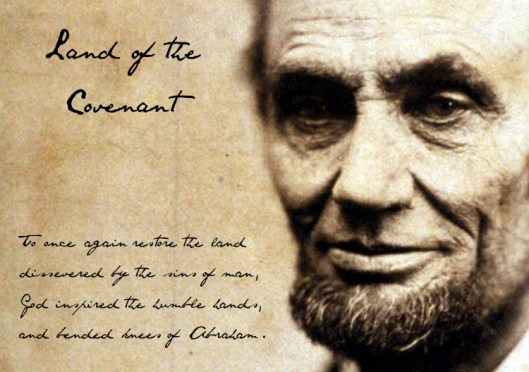
The Land of the Covenant

12 Wednesday Aug 2015

Posted by Colby Alexander in Battle, Blessings, General, Poems, Success, Trials

≈ Leave a comment

Abrahampoem

 “…Inasmuch as thy seed shall keep my commandments, they shall prosper in the land of promise.”      -1 Nephi 4:14


God has always made covenants with His people. He promises his blessings of prosperity to those who enter into this covenant with Him, and who obey Him. We learn that this is the case all the way back to the beginning of life on this earth. When Adam and Eve were cast out, they covenanted with the Lord to do his will, and obey him. In return, the Lord would bless them.

Abraham, Moses, Noah, and on and on and on, all were part of this covenant people. In the Old Testament we learn about Abraham, Isaac, and Jacob. Jacob (later known as Israel) has 12 sons, known now as the 12 tribes of Israel. Joseph, who is one of his sons carried on this special covenant. We get a hint of what happens to his special lineage in Genesis..

“Joseph is a fruitful bough, even a fruitful bough by a well; whose branches run over the wall…..Even by the God of thy father, who shall help thee; and by the Almighty, who shall bless thee with blessings of heaven above, blessings of the deep that lieth under, blessings of the breasts, and of the womb: (Genesis 49:22,25)

When Lehi sent Nephi back for the plates of brass in Jerusalem, it was partly because they contained a genealogy for their family. Upon obtaining them, they learned that they were descendants from this very same Joseph. Those words in Genesis have a more literal meaning now right? As Lehi and Nephi were lead to their “promised land” they were, in essence, “running over the wall”. They also took in themselves them the lineage of the Abrahamic covenant and the promised blessings.

We also learn that the Land itself, this “Promised Land”, is a part of this Covenant. The Prophets Lehi, and Nephi, as well as all subsequent prophets of the Americas hammered on this like a drum. They had been led to, and given a promised land, and instructed that: “Inasmuch as ye shall keep my commandments ye shall prosper in the land; but inasmuch as ye will not keep my commandments ye shall be cut off from my presence.” (2 Nephi 1:20).

So, how did the people on the American continent do? They did fine when they were keeping God’s commandments, but as soon as they slacked off, they were toast. It happened over and over again, the Jaradites? Toast. The Nephites? Toast. All because they couldn’t keep their end of the bargain. The Lord will bless those who follow Him, but eventually destroy those who do not.

So, lets fast forward a little bit. Its now 1776, and there are a bunch of new guys living on this “promised land”. They were guided here by inspiration (1 Nephi 13:12), and started to grow as a people. they were a righteous God-fearing people. And by living the commandments, and turning to God, they invoked the blessings of the land of promise. This people, who were severely outgunned, outmanned, and outmatched, were victorious in their fight for independence and liberty principally because they were righteous, and God had blessed them according to the covenant that lay upon the land.

Lets now fast forward to about 1844, the year Joseph Smith was martyred. Evil was flourishing. The saints were being slaughtered, illegally imprisoned, God’s temples were being burned, and slavery was rampant in the south. The land of the covenant needed a cleansing. The people as a whole had turned from God and chosen not to obey his commandments. And, by so doing, would soon be “cut off from His presence.”

The official cleansing process of the promised land would begin not even 20 years later in 1861. The year of the start of the Civil War. The civil war would claim the lives of 620,000 men, or 2% of the total population at the time, in today’s society thats the equivalent of 6.1 million dead soldiers.

The interesting thing to me that I learned about this war, and particularly Abraham Lincoln, was the mindset of the people, soldiers, and the president. It changed from the early days of the war into an assured and pure understanding of the meaning and reason for the conflict. By the end of the fighting, many soldiers, their leaders, and especially the President understood that the will, and hand of God Almighty was cleansing the land, the north and the south, of its sinful ways.

Its not unlike all the stories in the Book of Mormon, whose people cycled over and over again from wickedness and pride, to forced humility, then repentance and finally renewed blessings for their return to righteousness.

Listen to some of the quotes from Lincoln regarding his role, and the reason for the horrific war that he found himself smack dab in the middle of, and think to yourself – Would the leaders of our country today, this same country and covenant land, say these words?

Said Lincoln:

“Whatever shall appear to be God’s will, I shall do1.”

“I talk to God…When I could not see any other resort, I would place my whole reliance in God, knowing that all would be well, and that He would decide for the right”

“It has pleased the Almighty God to put me in my present position, and looking up to Him for divine guidance, I must work out my destiny as best I can.”

In his private journal after contemplating the war, and its effect on the people, he wrote:

“I am almost ready to say this is probably true-that God wills this contest, and wills that is shall not end yet.”

As the war continued, Lincoln’s understanding of the civil war as God’s will crystallized, and he felt that the war was indeed meant to free all men. He then declared his Emancipation proclamation, thereby freeing all the slaves in the southern states.

“God had decided this question in favor of the slaves” and later continued saying that he would keep, “this promise to myself, and to my Maker”.

In his second Inaugural address he said:

“Fondly do we hope-fervently do we pray-that this mighty scourge of war may speedily pass away…Yet, if God wills that it continue until all the wealth piled by the bondman’s two hundred and fifty years of unrequited toil shall be sunk, and until every drop of blood drawn with the lash shall be paid by another drawn withe the sword, as was said three thousand years ago, so still it must be said, “the judgments of the lord are true and righteous altogether.”

These are the words of a man who completely understood the covenanted land in which he lived. He understood the reason for the conflict, and he understood the way out was to turn to God, as a people, and by so doing it would invoke His blessing, to once again bring peace.

Abraham Lincoln shares a name with one of the greatest prophets that has ever lived, and whose name is associated with the covenant that God has always kept with his people. That is no coincidence. He was a humble man, a man who was placed in his position to help lead the people in our covenant land back to God.

Do we today look to God as we should? Are we as a people and a society worthy of the blessings of Heaven? Are we fulfilling our end of the bargain, or are we ripening for another cleansing? Lets all try and be more like Abraham Lincoln and recognize that we live in a precious “promised land” but only if we live to deserve it.

The Land of the Covenant

Storm-black skies of thunderclouds,
Had blinded eyes with sinful shroud,
And settled down amidst the proud,
Who’d burned God’s temple to the ground2

The Covenant people fell.

They killed the mouthpiece of the Lord,3
Who’d warned with his inspired words
That soon, all men would meet the sword,
Of justice, heretofore ignored.

The truth rejected by the land.

As saintly blood unjustly spilled,
Cried out for justice unfulfilled,
From underneath Missouri’s fields,
And echoed thrice4 its claim appealed.

The Lord withdrew his hand

The covenant broken, unretained,
By forcing men to live in chains,
Their freedom cry would be sustained,
By his familiar sacred name.

The covenant name of Abraham.

And then the lightning struck with fire,
Dividing houses with God’s ire5,
Fulfilling Joseph’s words inspired6,
Repentance now would be required.

The time had come for Abraham.

To once again restore the land,
Dissevered by the sins of man,
God inspired the humble hands,
And bended knees of Abraham.

Humility across the land.

The war-torn land of death and pain,
Would kneel again, and sing refrains,
Of humble praise, from sin abstain,
And serve the Lord their God again.

Repentant land of Abraham.

And now with blessing from on high,
Gods people now had heard the cry,
For freedom, that was once denied
To men, Who now had wings to fly7

Freed by father Abraham.

Invoked anew this covenant land,
Humbled by the Lord’s own hand,
A nation forced to kneel-NOW STANDS!
God bless the name of Abraham!

Notes

1 All Lincoln quotes were taken from the book, “The Lincoln Hypothesis” by Timothy Ballard

2 On October 9th, 1848, the Nauvoo temple was burned and destroyed by an apparent arsonist.

3 On June 27th 1844, the prophet Joseph Smith and his brother Hyrum were shot and killed by a mob while in the Carthage Jail in Illinois.

4 Joseph Smith, following this revelation from the Lord, asked for redress for the slaughter of his people in the state of Missouri.  All three petitions fell upon deaf ears.  D&C 101:86 Let them importune at the feet of the judge; 87 And if heed them not, let them importune at the feet of the governor; 88 And if the governor heed them not, let them importune at the feet of the president;

5 On April 12, 1861, Confederate forces fired upon Ft. Sumter in South Carolina officially the start of the Civil War. This would essentially divide the country in half.

6 On December 25th 1832, Joseph Smith received the revelation found in D&C 87 predicting the civil war almost 30 years prior to its actual occurrence.

7 On January 1, 1863, while still in the middle of the civil war, Abraham Lincoln issued the Emancipation Proclamation, an executive order that, in essence, changed the legal status of 3 million slaves in the southern states from “slave” to “free”.

Share this:

  • Tweet
  • Email a link to a friend (Opens in new window) Email
  • Print (Opens in new window) Print
  • Share on Tumblr
  • Share on Reddit (Opens in new window) Reddit
Like Loading...

Dream Dreams

29 Wednesday Jul 2015

Posted by Colby Alexander in Blessings, Dreams, General, Love, Poems, Sports, Visions

≈ Leave a comment

Tags

Barcelona Olympics, Charles Barkley, David Robinson, Magic Johnson, Michael Jordan, Patrick Ewing

Dreams_by_whisperfall1


In 1992 the greatest basketball team in the history of the world was assembled. It was the Barcelona Olympics, and for the first time, NBA players were allowed to represent team U.S.A. It was epic.

The team consisted of Larry Bird, Magic Johnson, Michael Jordan, John Stockton, Karl Malone, Scottie Pippin, Clyde Drexler, Charles Barkley, Patrick Ewing, David Robinson, Chris Mullin, and just to be fair to all the other countries, they included some guy from Duke named Christian Laettner.


The games weren’t even close enough to be called a joke, they were a complete slaughter. The closest game was a 32 point win over Croatia in the Gold Medal game 117-85.

It was like the Payson, Utah Jr jazz team versus the Harlem Globetrotters. It was fun to watch. They were representing the USA in the game we invented. They were rightly dubbed, the “Dream Team”.

The Dream Team was the epitome of greatness, everyone wanted to be just like them, even the teams they were playing against! They got to live out the most dominant display of basketball skill ever. They were untouchable, beyond reproach, unbeatable, you couldn’t stop them, only hope to contain them. They were a real life dream come true.

They were one kind of “Dream Team” But, we could also put together another team that could share the same name, but in a slightly different context. This other “dream team” could be comprised of all the Prophets or even regular people in scriptures who have had famous “dreams”.

Just to name a few….

Lehi, Nephi, Alma, Omer, Abimlech, Laban the Syrian, Pharaoh, Solomon, Nebuchadnezzar, Jacob, Daniel, Joseph Father of Jesus, and even Pilot’s wife.

Dreams are just one way that the Lord can use to speak to us. He has always used dreams to communicate. Sometimes its to reveal a doctrinal discourse like the Tree of Life, and sometimes its just to warn, or to encourage. And sometimes its just a fun way our brain takes away all the limitations of a mortal mind, and lets loose on the infinite potential of our imagination!

How many times have we had dreams that may be a little more than just us showing up to school in just our underwear? or having all of our teeth fall out? How many times have we been shown something, or seen something, or felt something that may be a bit more meaningful? Is it possible?

The Lord is the same today, yesterday and forever. He did it before, why not now?

In Joel 2:28 it says……

“And it shall come to pass afterward, that I will pour out my spirit upon all flesh; and your sons and your daughters shall prophesy, your old men shall dream dreams, your young men shall see visions:

I have had a few times where I have had dreams that were a bit more than the ordinary kind. I have had some that were actually quite meaningful to me. Not exactly like the dreams of Lehi or Nephi, but personal ones that have made a difference in my life. I knew, for example, that my youngest son, would be a boy before we had an ultrasound. I think the Lord gives us little snippets, or hints, just to remind us that He is close, and is aware of us.

Next time we have a special dream, where we see someone who may have passed, or an event we may have been worrying about, or something especially encouraging, maybe we should write it down, and work on the assumption that maybe, just maybe, it was sent to us on purpose, and that it may be our Heavenly Father sending a little note to us, to remind us He is there, and that He is listening.


Dream Dreams

When all the noise of day is gone and silence fills our ears,
Our mortal eyes at last we close, and daylight disappears.

And as we dream the dreams that mortal consciousness abates,
Our minds become the canvas where a masterpiece awaits!

We win! We sing! We save the world, with superhuman powers!
No limits to what’s possible! These precious dreaming hours!

We soar through space with ease of thought,
Just wishing- and it’s done!
We fly! defying gravity! Never tiring as we run.

But, sometimes we can see ahead, or we can sense or feel
A moment, person, or event that is, in truth, quite real.

But, when our sleepy eyes again perceive the light of day,
And wakefulness returns, our mortal limits are replaced.

But, even then, some special dreams endure our consciousness.
For they were placed there by design, to act as messages.

Of love, or of encouragement, to comfort or to teach.
Instructions given when the mortal mind is tough to reach!

In wakeful times the constant noise brings deafness to our ears,
But, dreams can be a wink from Heav’n
Reminding us it’s near.

Share this:

  • Tweet
  • Email a link to a friend (Opens in new window) Email
  • Print (Opens in new window) Print
  • Share on Tumblr
  • Share on Reddit (Opens in new window) Reddit
Like Loading...

Spiritual Credit

28 Tuesday Jul 2015

Posted by Tyson Alexander in General

≈ Leave a comment

Good Credit Score

Credit is defined as:

  1. The ability of a customer to obtain goods or services before payment, based on the trust that payment will be made in the future1
  2. The borrowing capacity of an individual or company2

These two definitions are primarily used in the financial world but have become common in our every day terminology.  Not only because we need ‘credit’ to qualify for a mortgage or a car loan, but we also use it to buy things in general (IE credit cards). As most of us understand,  there is a process and resulting score that the financial world uses to assess and determine how much it can trust us to make good on our financial promises.  That’s where the statement “based on the trust that payment will be made” comes into play (see definition 1 above).  After all, it’s easy to “promise” that payment will be made in the future, and a bit more difficult to actually make the payment.  If and when we miss a payment (or two or three), or even when make a payment past the due date that trust level goes down and is indicated in our credit score.  Factors in this score and in the resulting level of trust that the world has in our financial promises include our age, our debt to income ratios, how long we’ve been using credit, how faithfully we’ve made payments over time, etc.

For anyone to have a good credit score, payments need to be made and made on time consistently through the years, allowing that level of trust to be built up over time – and missed or late payments need to be avoided.  This seems logical right?  Therefore, if anyone wants to have an absolutely perfect credit score, that means that every single payment would be made on time, without fail.  Not even a single3 late payment – ever.  No missed payments, late payments, debt consolidation, renegotiated terms, or interest paid due to deferred payments.  Not a single failure to make good on your promise.  Now, imagine that the consumer who somehow fits this credit parameter and has for 40 or even 50 or 100 years and you can guess how high the level of trust is from the financial world in extending them credit – both in quantity and in quality. I think that most banks would allow this consumer to charge or borrow whatever they wanted with little fear that he would make good on his payment.

This principle is also true with the Savior.  Throughout the eons of the pre-existence (which is really more time4 than any of us can even imagine) Jesus Christ exhibited perfect obedience to every command and did always those things which pleased his father.5 Thus Christ was able to develop a truly infinite amount of spiritual credit.  This fact allowed the full gamut of positive effects flowing from the atonement to be efficacious to anyone and everyone – long before the atonement was actually performed.  This allowed every single person all the way back from the very beginning6 to draw upon the power of the atonement, utilize repentance, have faith in Christ, and through the spirit become more than they could have on their own – all long before the actual debt was paid.

Just imagine with me how many times throughout the long pre-existence the Lord was perfect in making his payments and in developing that spiritual credit.  Hint: it’s a really really really long time and a really really long and impressive list of things that he did.  This all leading up to the great moment in which he answered “here am I, send me.”7

The universe itself was perfectly content to allow the effects of the atonement to be realized prior to the atonement being performed.  The laws of justice and mercy had no issues with extending their spiritual credit for thousands if not millions or billions of years in advance of a promised payment.  That alone should give us an idea of just how perfect the savior had been because these eternal and immovable laws of the universe probably carry a bit more weight than the man-made credit bureau algorithms in the end – and that includes their absolute and exacting demand for a full and perfect payment.  Even a payment that fulfilled “every whit”8 of the law, yea, “every jot and tittle.”9   With that in mind, the second definition above seems appropriate – as the spiritual credit that the Lord acquired is very much related to his infinite “capacity”.

One point in all of this is to help us remember just how perfect the savior has always been, which allowed us to have perfect faith in his response to the the fathers question “who will go for us?”10 in the pre-existence and allows us to have perfect faith in him today – because we know with absolute certainty that he will make his payments.

The other point in all of this is to help us understand and to feel the intense gravity of his plea in the garden to somehow “let the hour pass from him.”11 As he went to “a place called Gethsemane”12, his soul became “exceeding sorrowful, even unto death”13 – yet he still moved forward, and he went “a little further.”  As he did, he “fell on his face, and prayed, saying, O my Father, if it be possible, let this cup pass from me.”14

Here we have the most perfect being, the most obedient and trustworthy of all, the most exact, faithful, honorable and loyal son after eons of time asking his father if there is a possible alternative to the required payment due to his feeling the immense weight of it all – and asking that question three times.  Christ himself said that he “would that I might not drink the bitter cup.”15 The idea of someone who has been perfectly obedient for eons, someone who understands so well the science of obedience and the immutable laws of the eternities, to explore the possibilities of another way and to even ask his father if there was a way out should help us feel the awesome power of that plea and the crushing weight of the world he felt on his shoulders.   Yet, as we know, the Savior in his perfect obedience and perfect love for all of us, submitted his will and any inklings of personal comfort that night to the father and took upon himself the sins and pains of the world which caused him – “even God, the greatest of all, to tremble because of pain, and to bleed at every pore, and to suffer both body and spirit.”16  

Thus the savior made good on his promise – just like we knew he would.  Just like his father knew he would, and just like the universe knew he would.  This perfect being; the light, the life, and the hope of the world was squeezed as none other could be, and in those pressing moments, rather than shrink – his soul did expand17 as he battled all alone against the vast armies of death and sin and darkness.  In the end, Jesus and his light overpowered death and paid the debt.  Now, Jesus Christ is eagerly encouraging us to access, use, and spend that same spiritual credit made available by his loving payment.  It is the limitless source of grace that we can draw from every single day – and in every circumstance to help us become like him and learn to love like him.

Let us be thankful for this gift, and let us receive the gift so that we can “rejoice in that which is given”, and rejoice “in him who is the giver of the gift.”18

Notes

1 Google search ‘definition of credit’

2 Investopedia.com/terms/c./credit.asp

3 I realize that credit and credit scores generally take 2, 7, or 10+ years’ worth of data to perform their calculations.  For the purposes of this definition, and the use of ‘absolute’ I have used the word never, and don’t intend that to be limited to the rolling 2 or 7 or even 10-year period.

4 Alma 40:8 – Time is only measured unto man.

5 John 8:29

6 I do mean the very beginning (like the pre-existence), and not just the beginning of mortality.  The book of Revelations indicates that during the war in heaven, the victorious troops (Michael and his angels) overcame the great dragon, and cast him out “by the blood of the Lamb.”  We can understand that the blessings flowing from the atonement are literally infinite (and this includes time).

7 Abr. 3:27. See also Moses 4:1, 2 Ne. 16:8 and Isa. 6:8.  This idea allows us to rule out any other options for volunteers at that moment as well.  Even if there were others who volunteered to go for us, or who ‘promised to pay’ – their ‘capacity’ or their spiritual credit just didn’t qualify them to make that contract (covenant).  That debt-to-income ratio was just way too high for us.

8 3 Ne. 1:25

9 Alma 34:13

10 2 Ne. 16:8 and Isa. 6:8

11 Mark 14:35

12 Matt. 26:36

13 Mark 14:38

14 Matt. 26:38

15 Matt. 26:39. See also Mark 14:35

16 D&C 19:18

17 Alma 5:9

18 D&C 88:33

Share this:

  • Tweet
  • Email a link to a friend (Opens in new window) Email
  • Print (Opens in new window) Print
  • Share on Tumblr
  • Share on Reddit (Opens in new window) Reddit
Like Loading...
← Older posts
Newer posts →
Follow 4 Brothers Blog on WordPress.com

Enter your email address to subscribe to this blog and receive notifications of new posts by email.

Join 169 other subscribers

Recent Posts

  • “One Dollar, Bob”
  • Everlasting Gobstoppers and Foodless Feasts
  • Peanut Butter Cups, Counterfeit Confections, and the Hope for a Superior Interior.
  • How to Grow Grasshopper Legs
  • The Big Box Paradox and the Fable that Labels Enable

Blog Stats

  • 22,799 hits

Instagram

No Instagram images were found.

4 Brothers Blog

4 Brothers Blog

Blogs I Follow

  • The Christensen Six
  • A Cop's Thoughts
  • Gena Standing Out
  • Think Celestial
  • anthology78
  • 4 Brothers Blog

Blog at WordPress.com.

The Christensen Six

A blog about family, faith and fun

A Cop's Thoughts

Life after a shooting

Gena Standing Out

Inspirations and musings of a woman used to standing out from the crowd

Think Celestial

Learning to "Think Celestial" and to "feast upon the words of Christ"

anthology78

4 Brothers Blog

  • Subscribe Subscribed
    • 4 Brothers Blog
    • Join 63 other subscribers
    • Already have a WordPress.com account? Log in now.
    • 4 Brothers Blog
    • Subscribe Subscribed
    • Sign up
    • Log in
    • Report this content
    • View site in Reader
    • Manage subscriptions
    • Collapse this bar
 

Loading Comments...
 

    %d